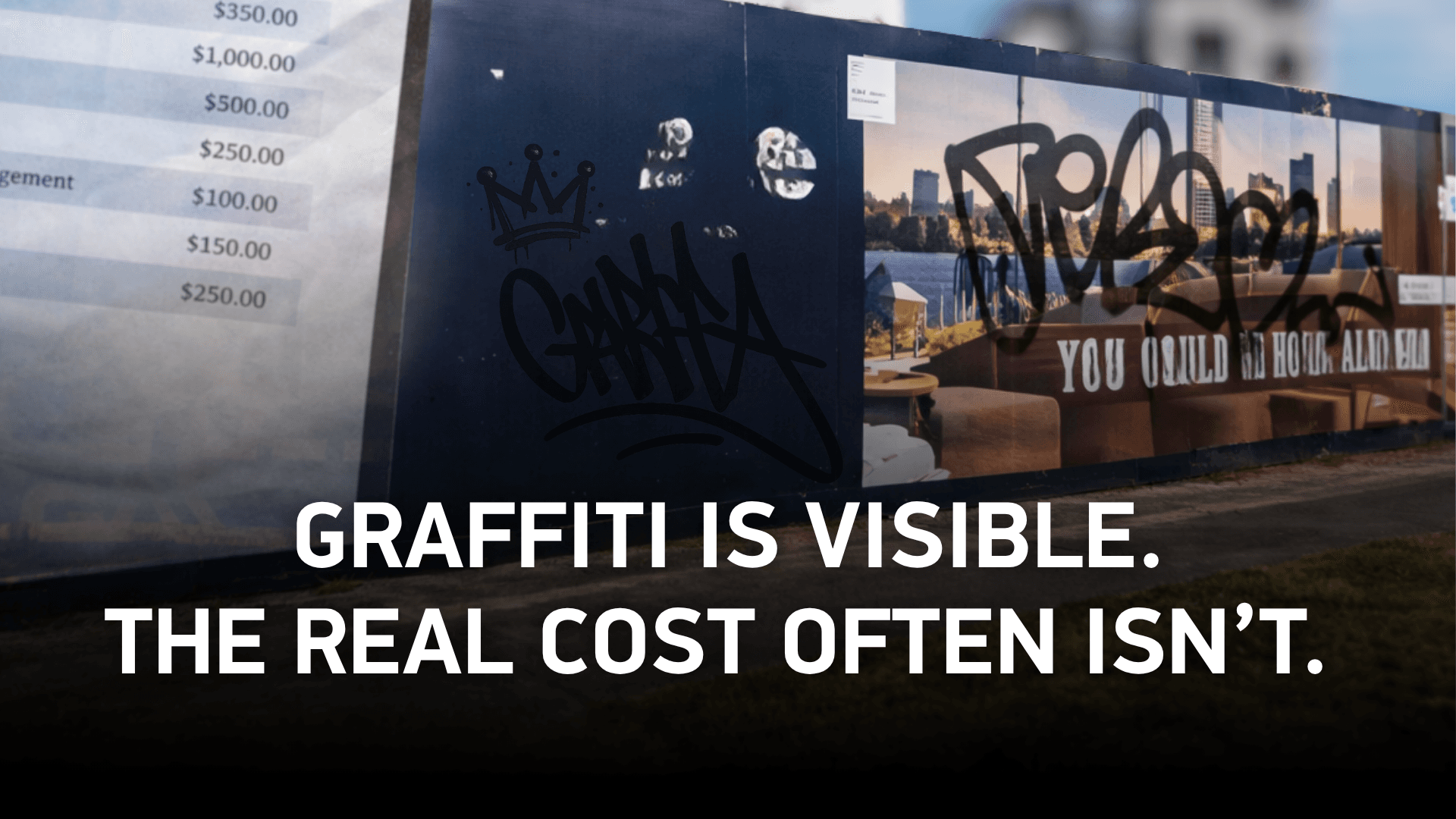
The real cost is everything that follows.
Graffiti rarely happens at a convenient time. It shows up after hours. Over a weekend. Just before a stakeholder walk-through. Sometimes right when marketing launches and the hoarding is finally doing the job it was designed to do.
You arrive on site expecting a clean, professional presentation, and instead the branding is covered, renders are obscured, and the perimeter no longer reflects the quality of the development behind it.
The first instinct is simple: clean it and move on.
When Cleaning Isn't Enough
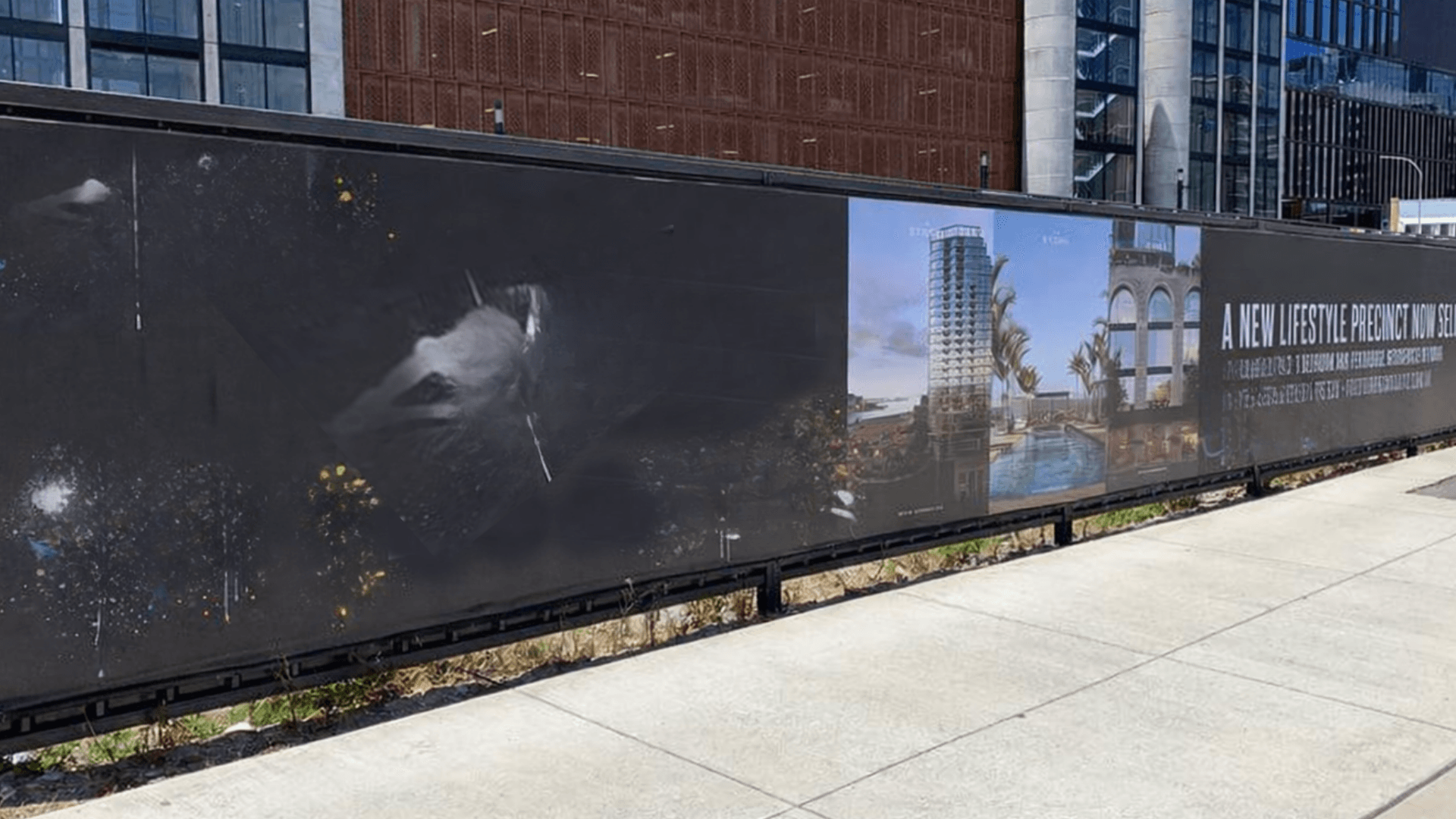
On unprotected vinyl banners, removing graffiti is rarely as straightforward as it sounds. In many cases, the cleaning process itself can damage the printed surface. Ink lifts, colours smear, and the artwork does not return to its original finish. What begins as a seemingly minor issue can quickly escalate.
Instead of a quick clean, replacement becomes the only way to restore the site’s presentation and protect the brand image that has already been invested in.
That means:
- Reprinting the banner
- Organising freight
- Booking installers
- Coordinating site access
- Waiting for production
- Living with damaged branding in the meantime
What looked like a small issue quickly turns into a multi-step process, with cost, time, and disruption attached.
For project teams, the real impact is not just the direct replacement cost, but the time spent coordinating suppliers, managing access, and restoring presentation while the site remains visible to the public.
The Cost Difference is Significant
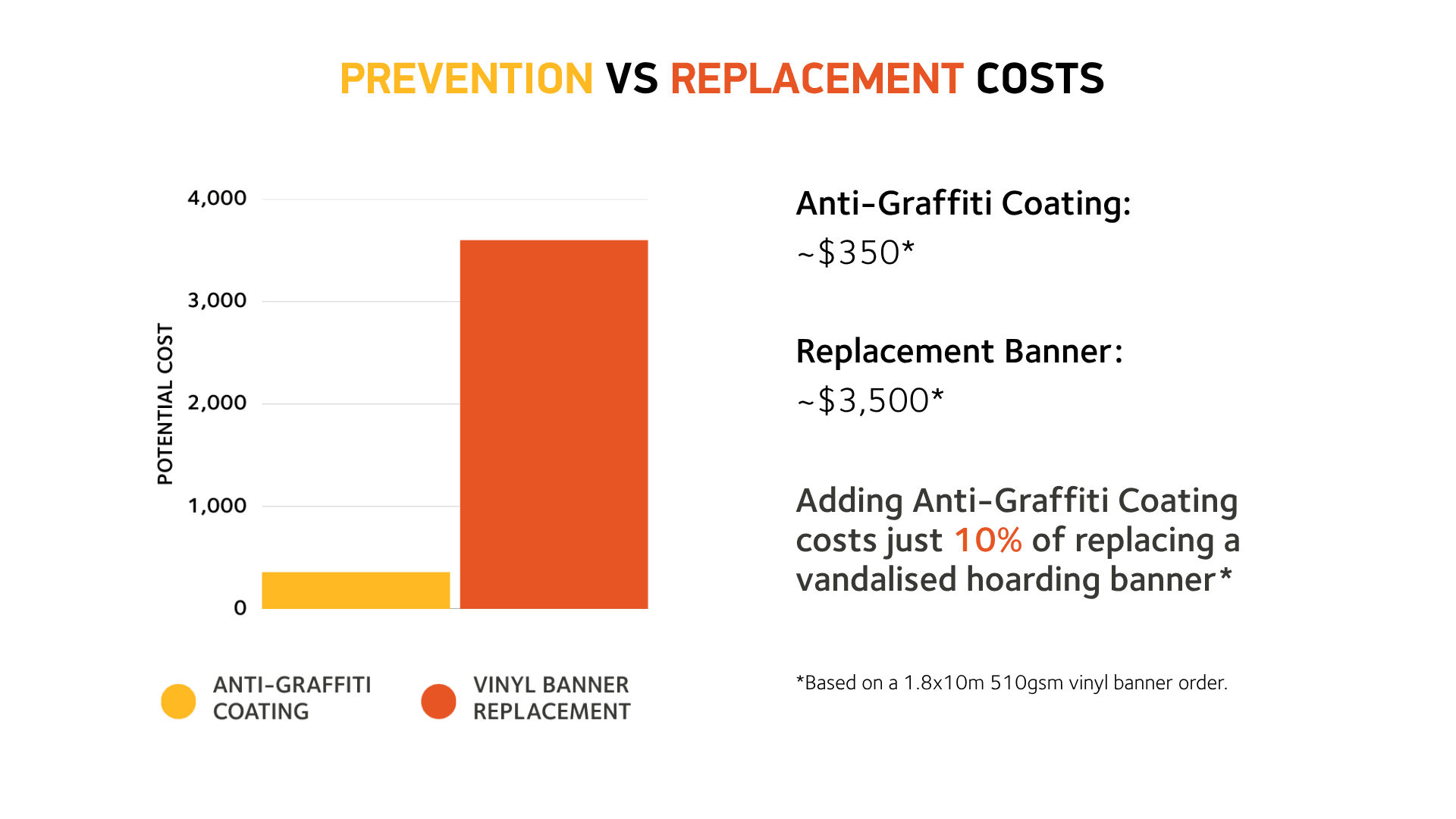
This is where the cost comparison becomes difficult to ignore.
Adding anti-graffiti coating upfront is a small addition when compared to replacing a vandalised vinyl banner.
Typical comparison:
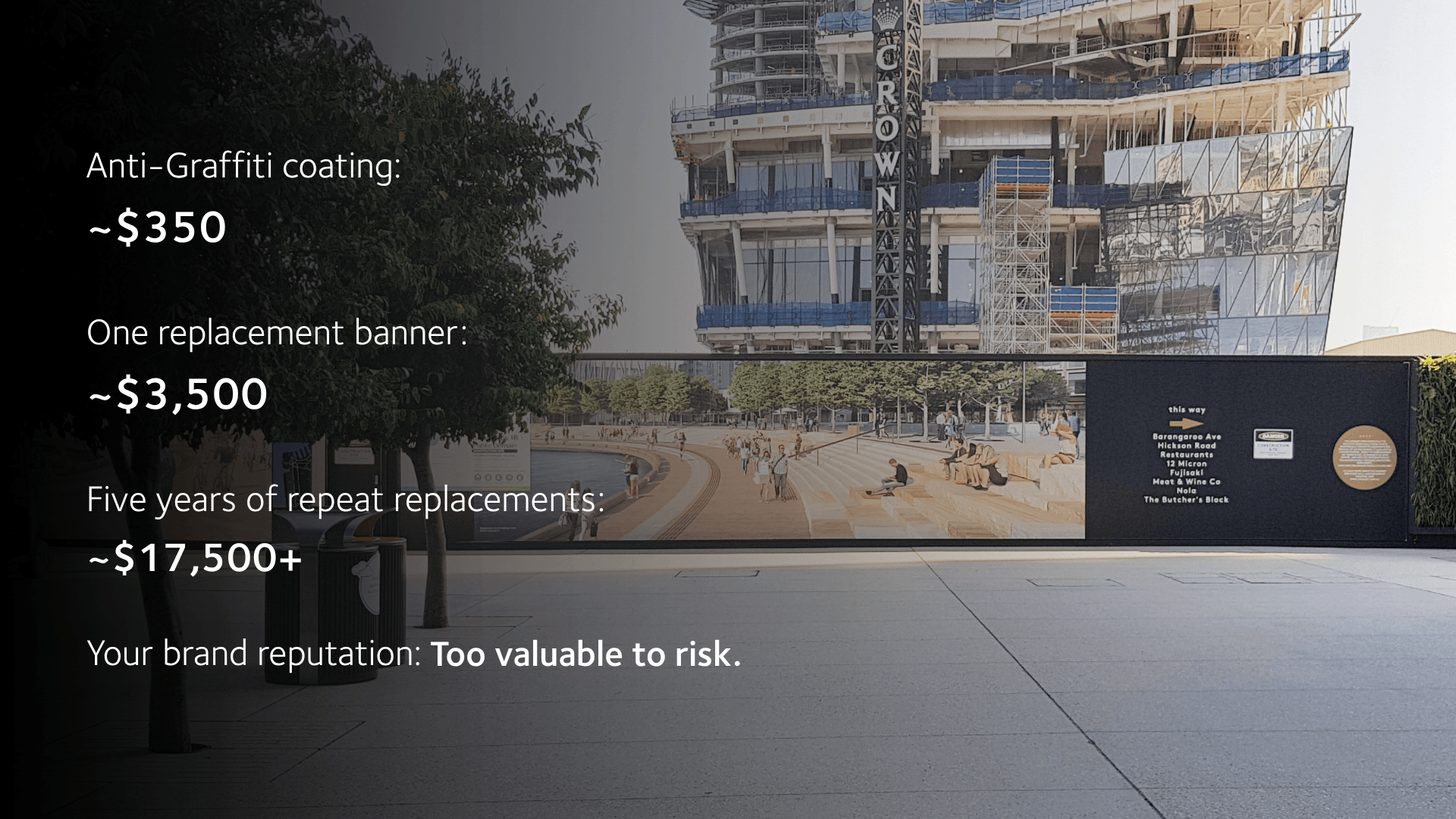
- Anti-graffiti coating: ~ $350
- Replacement vinyl banner: ~ $3,500
That is roughly 10% of the replacement cost.
And that does not include the internal time spent organising the replacement, coordinating freight and installation, or the reputational impact of having vandalised hoardings visible while you wait.
On live projects, these indirect costs can quickly add up.
What Changes With Anti-Graffiti Coating
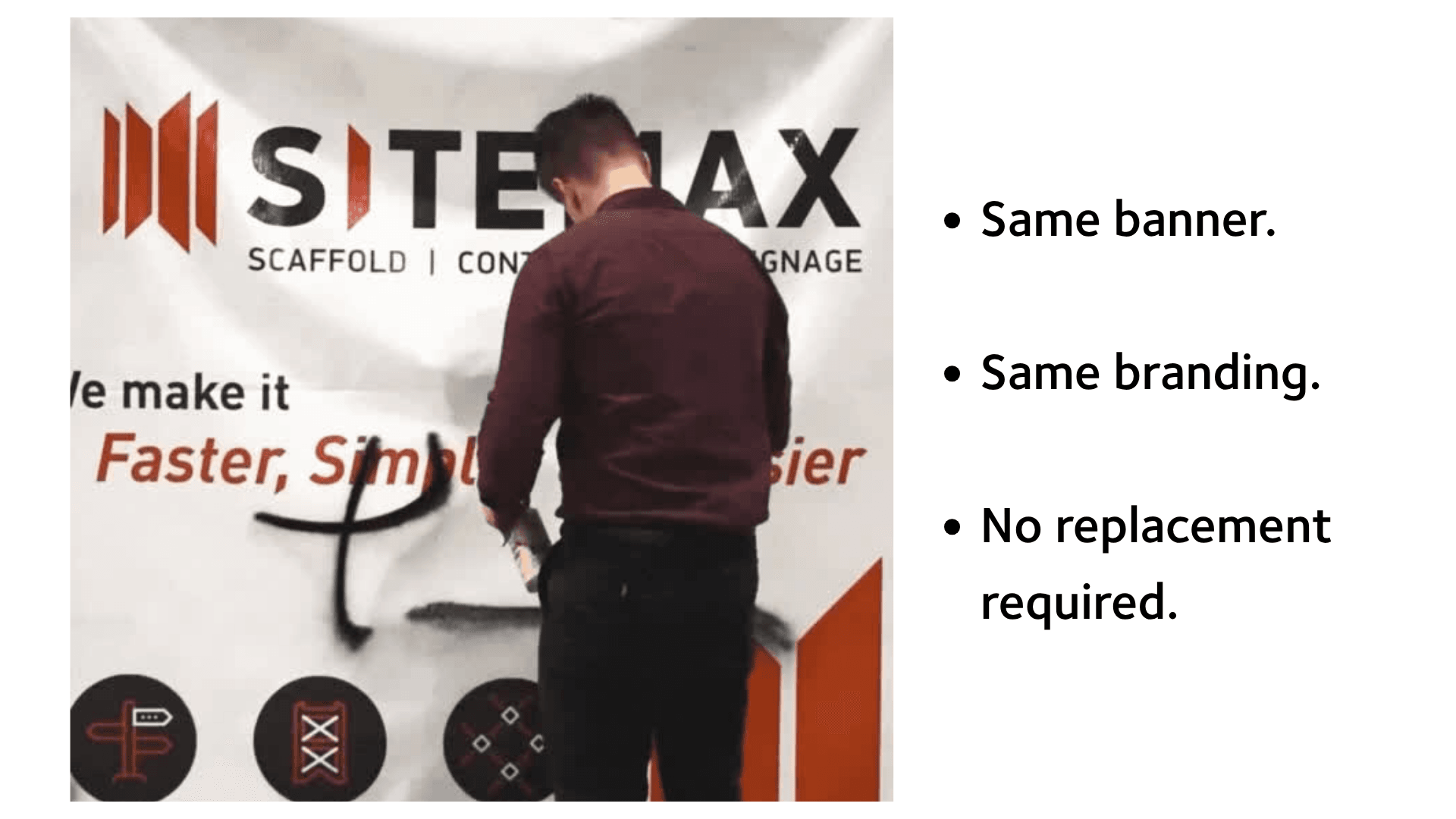
Anti-Graffiti Coating adds a protective layer over the printed ink graphics. When graffiti appears, it can be removed without damaging the artwork underneath.
Instead of reprinting and reinstalling vinyl, the process becomes:
1. Anti-Graffiti cleaner applied to vinyl
2. Wipe down affected area with soft cloth
3. Presentation and reputation restored
Same banner. Same branding. No replacement required.
This is where prevention significantly changes the lifecycle cost of the hoarding.
Rather than restarting the replacement process every time vandalism occurs, the existing banner remains in place and the project presentation is maintained.
Why This Matters on Real Projects
Hoardings often carry the brand long before construction starts or the building is complete. They are seen by buyers driving past, investors visiting site, local communities, and stakeholders tracking progress.
For many developments, the site perimeter forms the first impression of the project. So when that presentation is compromised, even briefly, it changes how the development is perceived.
Anti-graffiti coating does not change how the hoarding looks on day one.
What it changes is what happens on day 90, day 180, or whenever graffiti appears.
Prevention keeps the same banner in place.
Replacement starts the process all over again.
A small upfront addition for a very different experience on site.
If you’re planning hoardings for an upcoming project, now is the time to think beyond day one.
Add Anti-Graffiti Coating to protect your branding, reduce replacement costs, and maintain presentation throughout the build.
Explore Vinyl Banner Hoarding Options
- Anti-Graffiti Coating
- Vinyl Banner Hoardings
- Hoarding & Fencing
- Fencing Construction
- Installation, Maintenance & Removal