
The Conversation Has Changed
A few years ago, most construction suppliers could get through procurement with three things:
- A capability statement
- Insurance certificates
- A price
Today, the conversation sounds very different.
Procurement teams increasingly want to understand what products are made from, whether materials can be recycled, what happens at end of life, whether sustainability claims can be supported with documentation, and how suppliers contribute to ESG reporting requirements.
For many suppliers, it can feel like the rules changed overnight. But in reality, the pressure has been building quietly in the background for years.
Procurement Teams Are Under Pressure Too
One of the biggest misconceptions around ESG is that procurement teams suddenly became obsessed with sustainability.
That’s not really what’s happening.
They’re responding to pressure themselves.
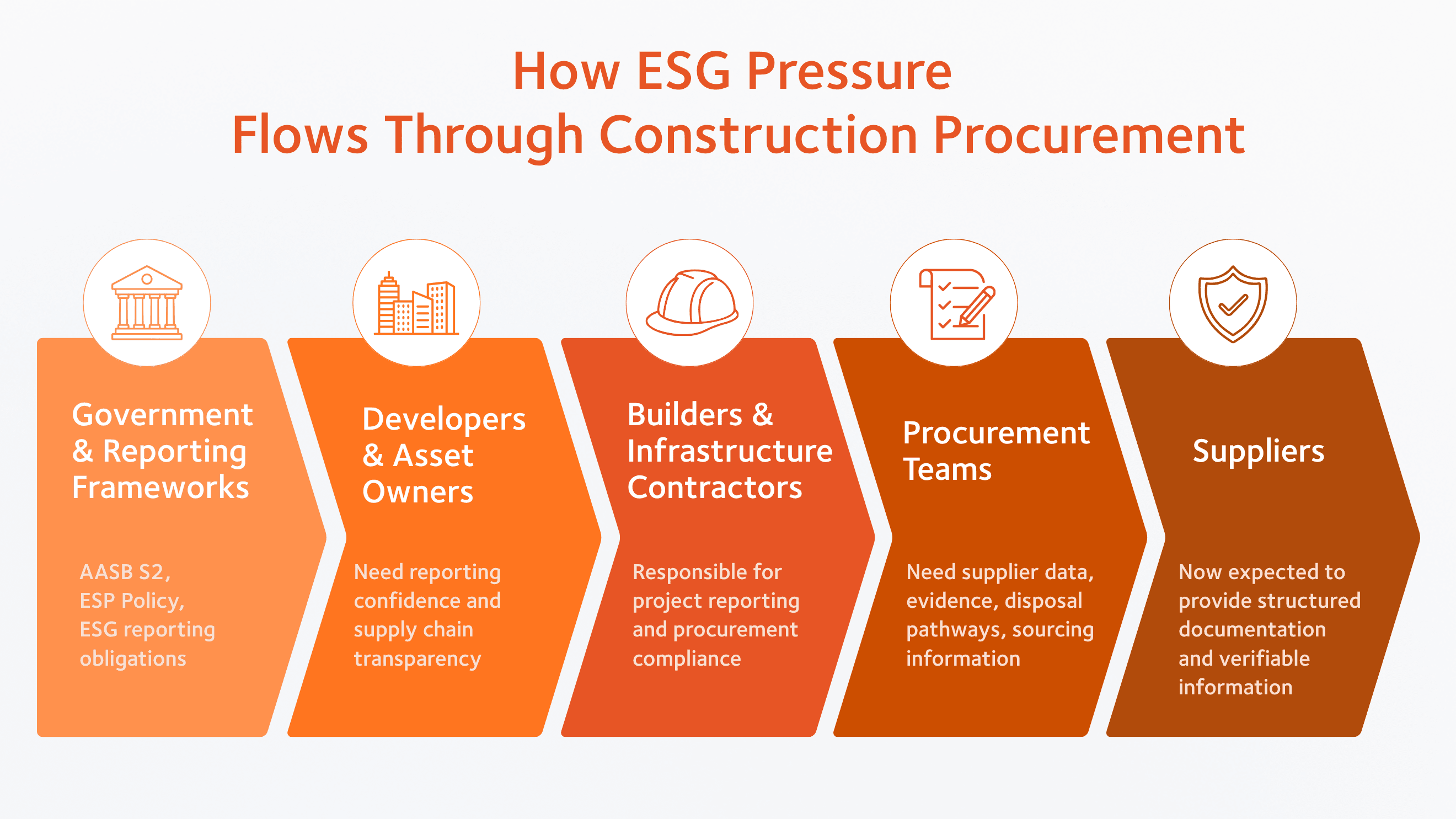
Across Australian construction, builders, developers, infrastructure contractors, and asset owners are now being asked tougher questions around:
- waste
- sourcing
- emissions
- circularity
- supply chain transparency
Frameworks like AASB S2 and the Commonwealth Environmentally Sustainable Procurement Policy are pushing sustainability reporting deeper into the construction supply chain than ever before. As reporting requirements continue to expand, procurement teams are increasingly responsible for gathering supplier information that can support tender submissions, ESG reporting, supplier assessments, and project compliance documentation.
Eventually, that pressure lands with suppliers.
The Real Problem Isn’t Sustainability
The real challenge for many procurement teams isn’t sustainability itself.
It’s documentation.
Most procurement teams are not expecting every supplier to have perfect carbon accounting systems or highly complex ESG frameworks. What they actually need is much simpler: usable information that can be quickly inserted into reporting and procurement processes.
Information they can use within:
- tender submissions
- ESG reports
- procurement reviews
- supplier questionnaires
- project documentation
Because when reporting deadlines hit, vague sustainability language becomes useless very quickly.
Saying “we care about the environment” doesn’t help a procurement manager complete a submission. But documented sourcing information does. Defined disposal pathways do. Product specifications do. Supporting evidence does.
The suppliers reducing the most friction are often the ones making procurement teams’ jobs significantly easier.
The Suppliers Standing Out Right Now
The suppliers standing out right now are not necessarily the ones making the biggest sustainability claims. They’re the ones making procurement easier. The ones providing clear answers instead of vague marketing language. The ones helping project teams access information quickly when reporting deadlines approach.
Construction projects now involve more scrutiny than ever before. Developers, ESG consultants, financiers, government bodies, and procurement teams all want greater confidence that supplier claims can actually be supported if questioned later.
That’s changing the role supplier documentation plays within construction.
Quietly, but significantly.
Why This Matters for Construction Suppliers
This shift is no longer just about compliance.
It’s becoming a commercial advantage.
Suppliers who can provide structured, easy-to-reference information are becoming:
- easier to approve
- easier to specify
- easier to retain across projects
Not because they have the flashiest sustainability campaigns, but because they make life easier for the people managing procurement, reporting, and compliance obligations under increasing time pressure.
And in construction, easier matters.

How Sitemax Is Responding
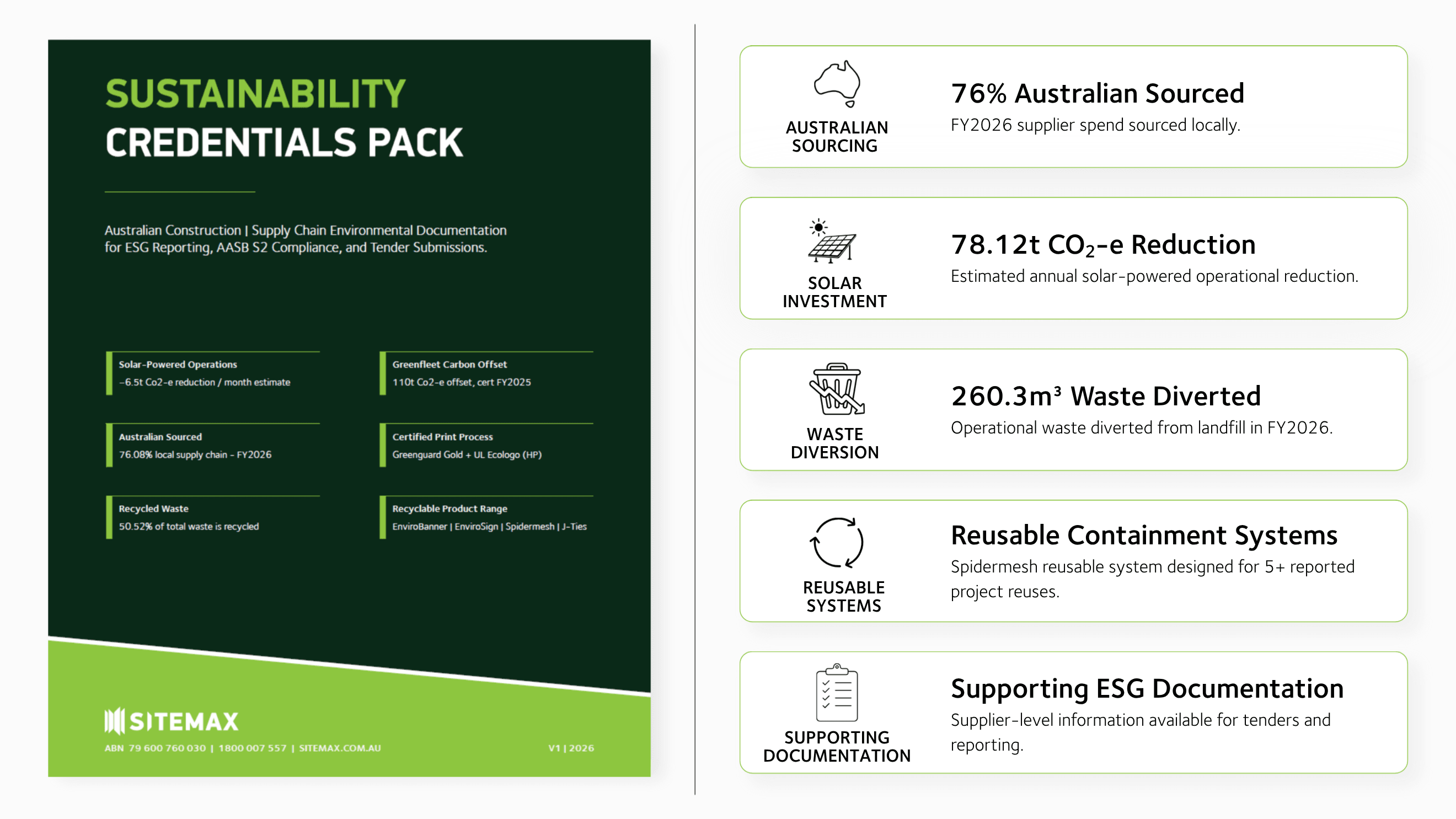
At Sitemax, we’ve seen this shift building across construction and infrastructure projects over the past several years. That’s one of the reasons we developed our Sustainability Credentials Pack, designed to help procurement and project teams access clearer supplier-level environmental information for tender submissions, ESG reporting, and supply chain assessments.
The pack includes structured information across areas such as recyclable product specifications, reusable containment systems, Australian sourcing, waste diversion initiatives, solar-powered operations, and supporting environmental documentation.
The goal wasn’t to create another sustainability brochure.
It was to create something genuinely useful.
Because the future of ESG in construction probably won’t belong to the companies making the loudest claims. It’ll belong to the companies helping project teams reduce risk, improve reporting confidence, and simplify procurement across the supply chain.
Need Sustainability Information for Your Next Tender or Supplier Review?
If you’re assessing Sitemax as a supplier, preparing a tender, or gathering information for ESG and procurement reporting, we’ve made our sustainability credentials easier to access.
Explore Sitemax’s sustainability initiatives and supporting documentation on our Sustainability Page.