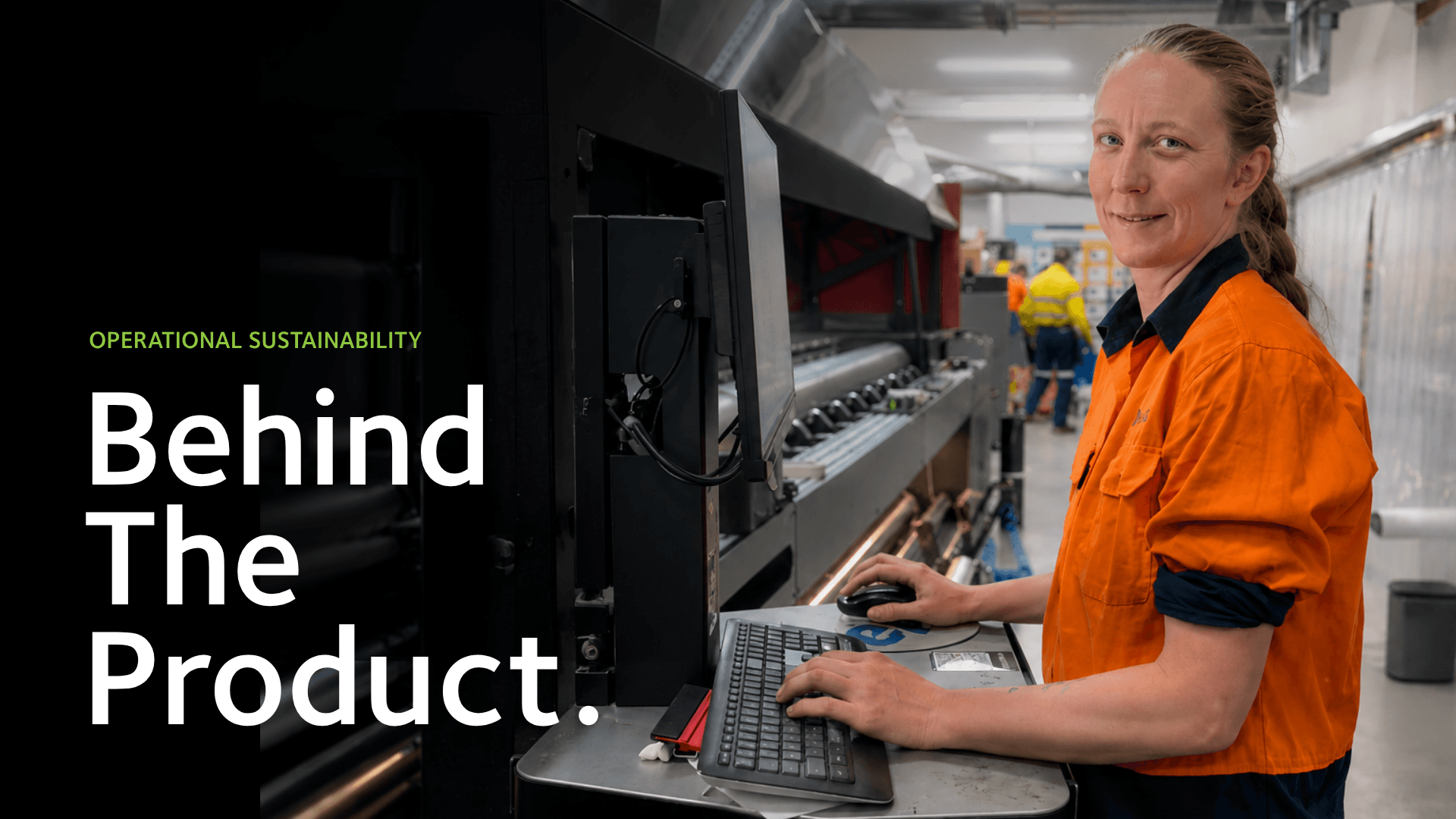
What makes one supplier more sustainable than another? It's tempting to look at the product and stop there. Is it recyclable? Is it reusable? Is it manufactured in Australia? They're all important questions, but they're not the only ones worth asking.
Every product is shaped by hundreds of decisions before it reaches a construction site. From manufacturing and sourcing through to waste management, energy use and product development. Together, these decisions form what's often referred to as operational sustainability. Operational Sustainability is not about claiming to be perfect. It's about understanding how a business operates, where it's making progress and how those efforts create value for its customers.
As sustainability expectations continue to evolve across the construction industry, many project teams are also looking for greater transparency into the businesses they choose to work with. Understanding how a supplier approaches these operational decisions can help build confidence, support procurement processes and provide valuable context alongside the products themselves.
What This Looks Like At Sitemax
At Sitemax, we know sustainability isn't a destination that can simply be ticked off.
Construction products still need to meet demanding requirements for safety, durability, performance and value. While not every environmental challenge has a practical solution today, we've continued to make improvements where we can.
Those improvements take many forms. Some reduce our operational impacts, while others provide customers with greater visibility into how we operate and the information they increasingly need during procurement and supplier evaluations.
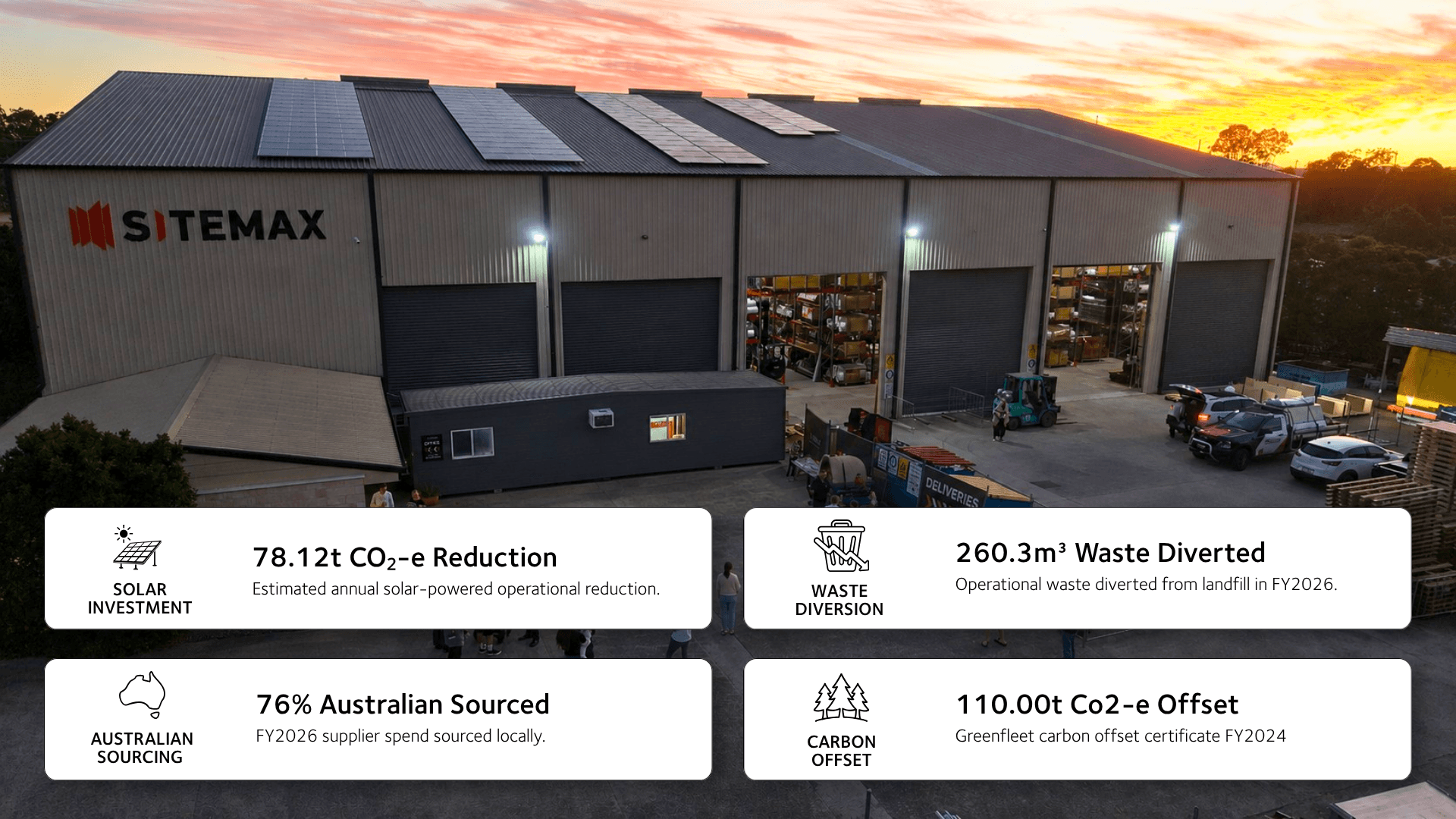
Our Gympie headquarters operates with solar generation, helping reduce reliance on grid electricity. We've also partnered with Greenfleet to support native forest restoration through a verified carbon offset of 110 tonnes CO₂-e, while diverting 260.3m³ of operational waste from landfill in 2025. Today, 76% of our supplier spend is with Australian businesses, supporting local supply chains, and we've continued transitioning many internal processes to digital workflows to reduce paper consumption.
While each initiative addresses a different aspect of our business, together they help us provide customers with meaningful information about how we operate - not just the products we supply.
Better Operations Support Better Outcomes
The way a business operates often influences the products it develops.
For us, operational sustainability isn't only about reducing impacts within our own business. It's also about identifying opportunities to improve the products we supply, where practical, while delivering genuine value for our customers.
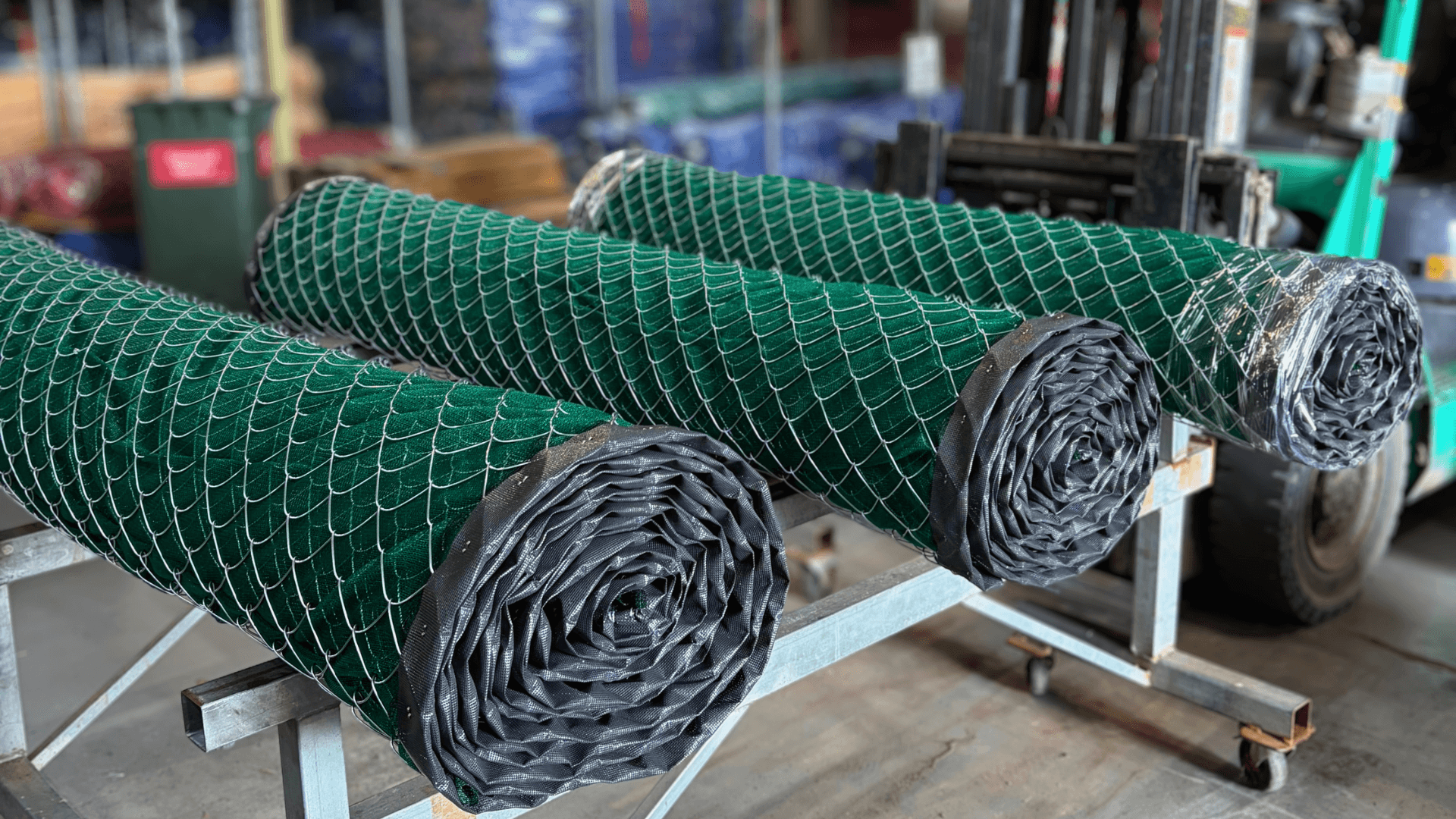
- SpiderMesh™ is one example. Its reusable steel frame remains in service across multiple projects, helping reduce reliance on single-use scaffold containment while lowering replacement purchases, reducing material consumption and supporting circularity objectives.
- EnviroBanner™ provides a PVC-free alternative to traditional banner materials for projects looking to reduce reliance on PVC without compromising the durability and print quality expected on site.
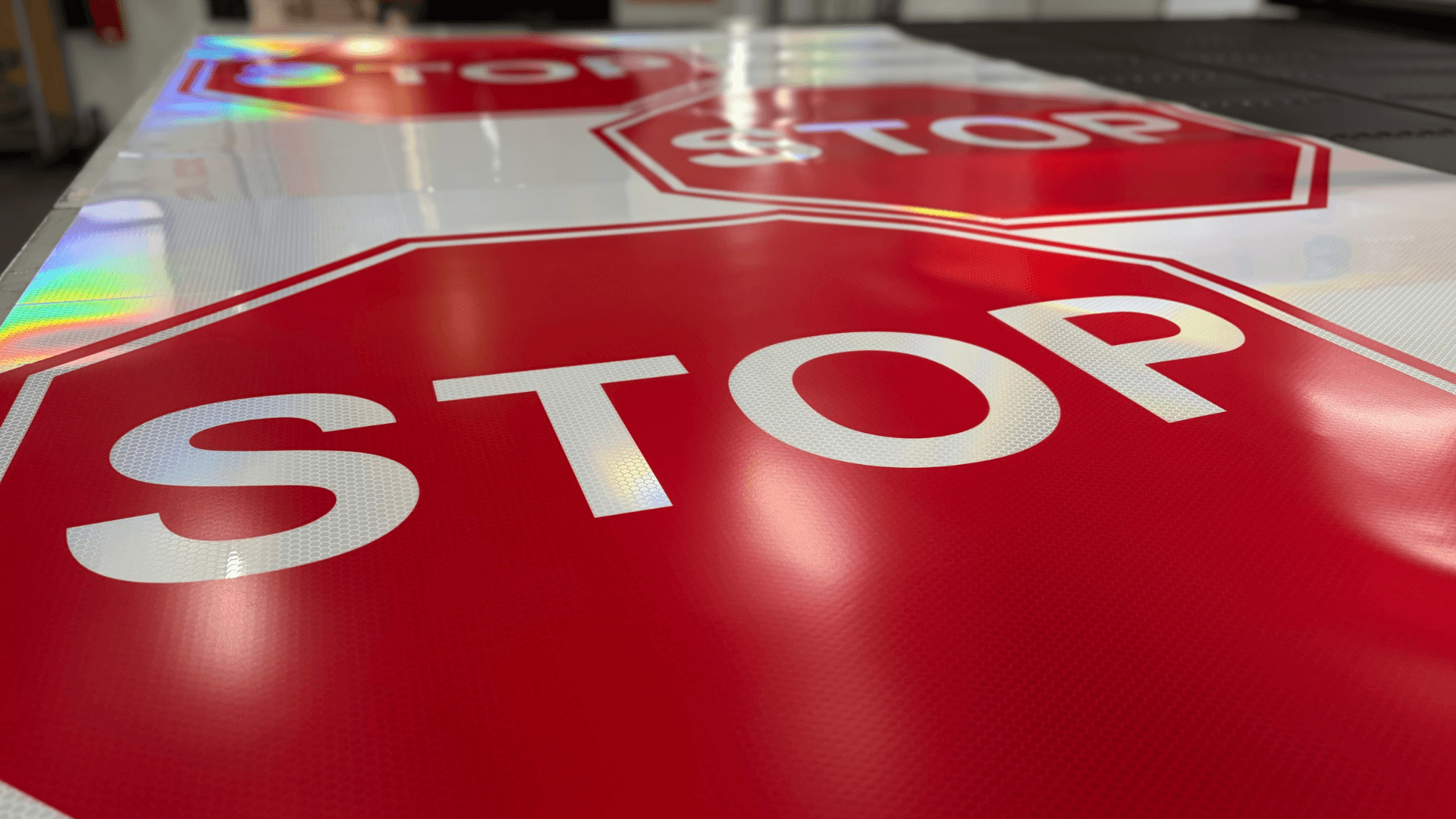
- EnviroSign™ is manufactured using recyclable substrates in Australia and can be paired with our signage removal and disposal service, providing a clearer end-of-life pathway while supporting project waste reporting.
- J-Ties™, manufactured in Australia from recyclable galvanised steel, also exceed AS1576.7 scaffold containment requirements, allowing customers to address sustainability and compliance with the same product rather than having to compromise one for the other.
Not every product has the same sustainability profile, and not every environmental challenge has a simple solution. That's why we continue to review our product range, explore alternative materials and investigate improved end-of-life pathways as technologies, recycling infrastructure and customer needs continue to evolve.
The Decisions Behind The Print
Not every sustainability decision involves redesigning a product. Sometimes it's about improving the way it's produced.
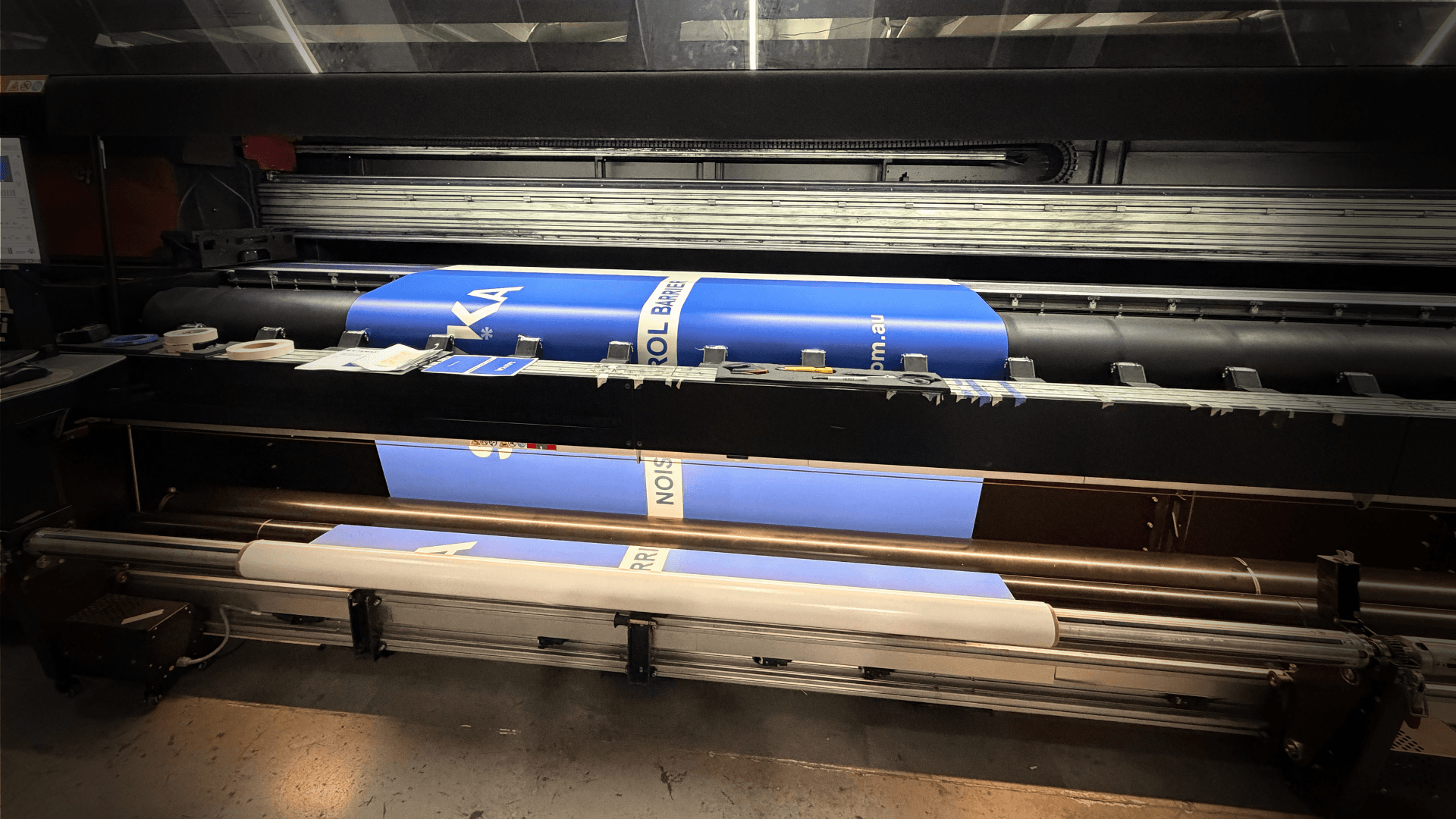
At Sitemax, we use HP Latex printing technology with water-based inks carrying UL GREENGUARD Gold and UL ECOLOGO® certifications. While these certifications are issued to HP and apply to the inks used throughout our print process, they provide customers with greater transparency into one of the manufacturing processes behind the finished product.
The choice of this print technology also influences the environment our team works in. Water-based, low-emission inks help create a more comfortable production environment while still delivering the durability and print quality our customers expect. A strong reminder that operational improvements aren't always visible in the finished product, but they can still make a meaningful difference.
More Than The Finished Product
Operational sustainability isn't defined by one initiative, nor is it ever truly finished.
As technologies improve, recycling infrastructure develops and customer expectations continue to evolve, businesses need to evolve too.
For customers, what matters isn't perfection. It's understanding the progress a supplier is making, the information they can provide and their commitment to continual improvement.
Ultimately, that's what builds confidence. Not perfection, but transparency.
Operational sustainability is only one part of our broader approach to sustainability, but it's an important one. If you'd like to explore our operational initiatives, product credentials and supporting environmental information, visit our Sustainability page or get in touch with our team.