The latestfrom Sitemax
In such a dynamic and ever-evolving industry, we’ve always got plenty of news to share. Explore our articles for insights, inspiration, and the latest updates.
In such a dynamic and ever-evolving industry, we’ve always got plenty of news to share. Explore our articles for insights, inspiration, and the latest updates.
Historically, supplier information was largely focused on product specifications, compliance certificates and pricing. Today, that information is still important, but it is no longer the only information being requested.
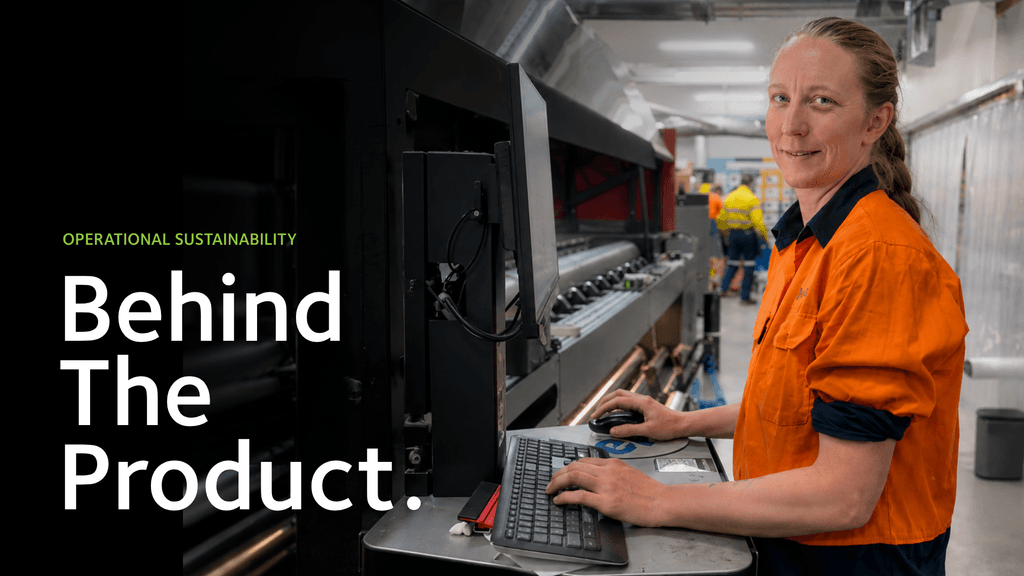
Every product is shaped by hundreds of decisions before it reaches a construction site. From manufacturing and sourcing through to waste management, energy use and product development. Together, these decisions form what's often referred to as operational sustainability.

Questions such as whether a product can be reused, recycled, recovered or measured as part of a reporting framework are becoming increasingly common across procurement reviews, ESG reporting and sustainability assessments.

Procurement teams increasingly want to understand what products are made from, whether materials can be recycled, what happens at end of life, whether sustainability claims can be supported with documentation, and how suppliers contribute to ESG reporting requirements.

When project pressure ramps up, nobody wants to discover the "sustainable option" created a compliance problem six weeks later. That's where many suppliers lose credibility. They talk about sustainability, but they can't answer the technical questions behind it.
Another challenge is that terms such as recyclable, reusable and recycled content are sometimes used interchangeably, despite describing very different outcomes.
-1024x576.png&w=2048&q=75)
Sitemax was engaged to deliver a complete solution, including timber fencing construction, printing and installation of vinyl banners, and an ongoing maintenance program to keep the perimeter looking its best throughout the build.
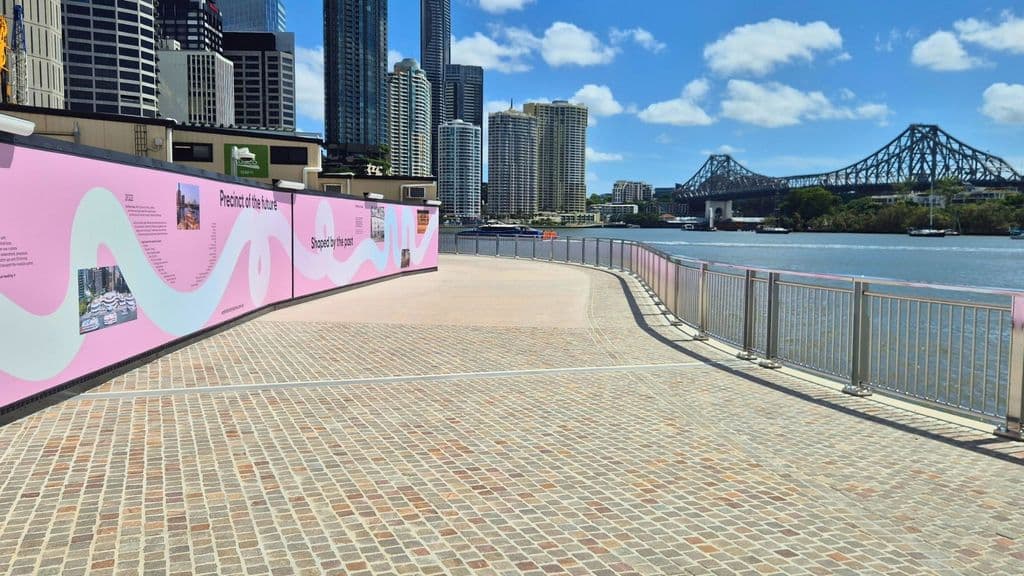
At Waterfront Brisbane, the vision extended far beyond what was being built inside the site. From day one, the project team understood that this location — one of Brisbane’s most visible areas — demanded more than a standard construction boundary.
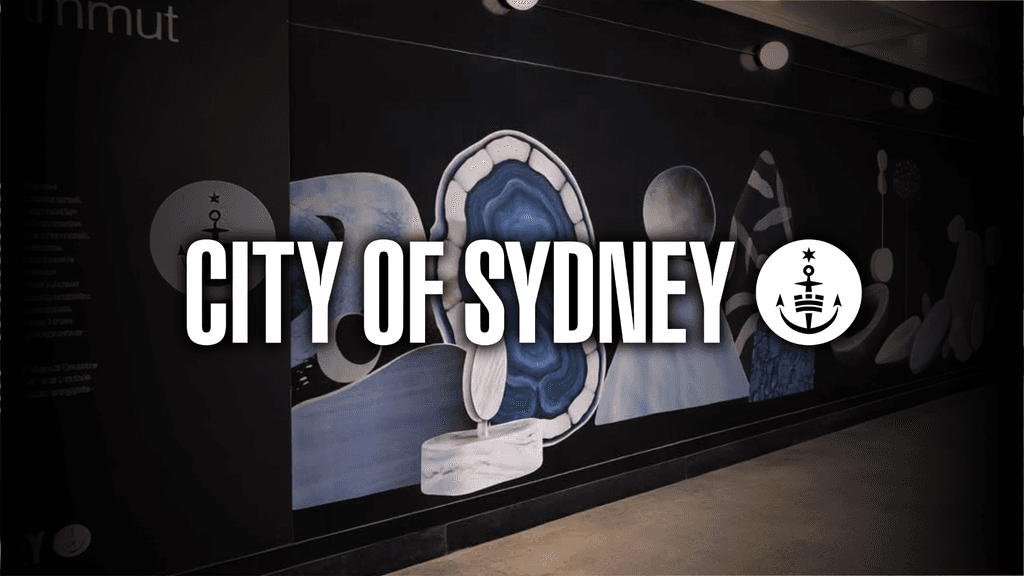
At its core, the program is the City’s way of reducing the visual impact of construction in busy public areas while giving artists visibility across Sydney.
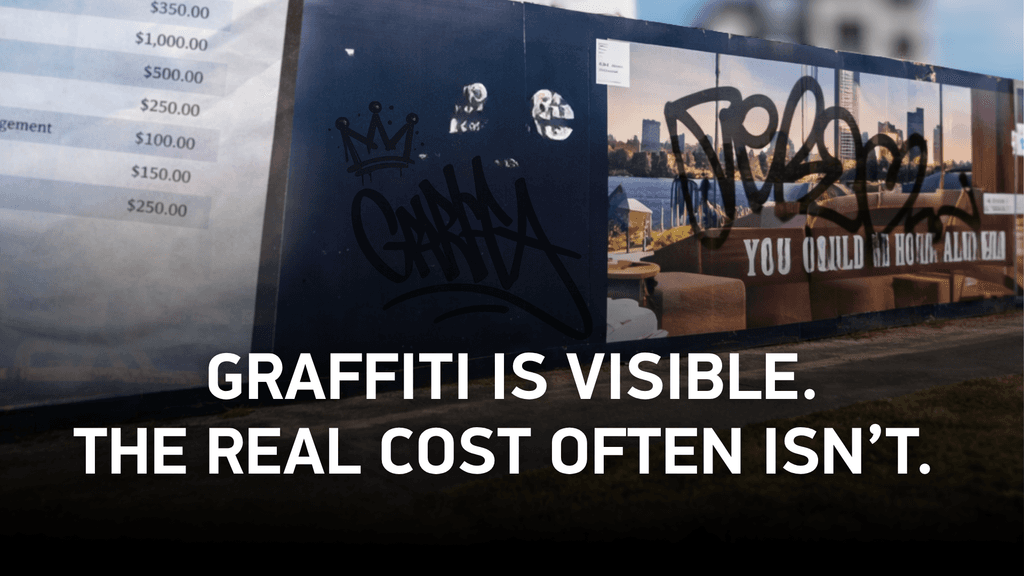
For project teams, the real impact of graffiti is not just the direct replacement cost, but the time spent coordinating suppliers, managing access, and restoring presentation while the site boundary remains visible to the public.
-1024x576.png&w=2048&q=75)
Wrapped around the perimeter of The Store in Newcastle West, premium vinyl banner hoardings gave the project a presence well before construction began to define it. Refined branding. Polished concept imagery. Clean, uninterrupted panels stretching along a busy urban edge.
Graffiti can appear within days of installation, particularly in metro and high-traffic areas. Once a site is targeted, repeat vandalism is common. The real cost isn’t just the effort required to remove it, but the broader impact that follows — damaged brand perception, replacement panels, unexpected variations, delays, and reputational risk.
Choosing banner mesh isn’t about selecting the “best” product — it’s about choosing the right solution for your site conditions and project goals. Whether your priority is branding, wind performance, durability, or long-term site presentation, Sitemax can help you specify the right banner mesh solution from day one.
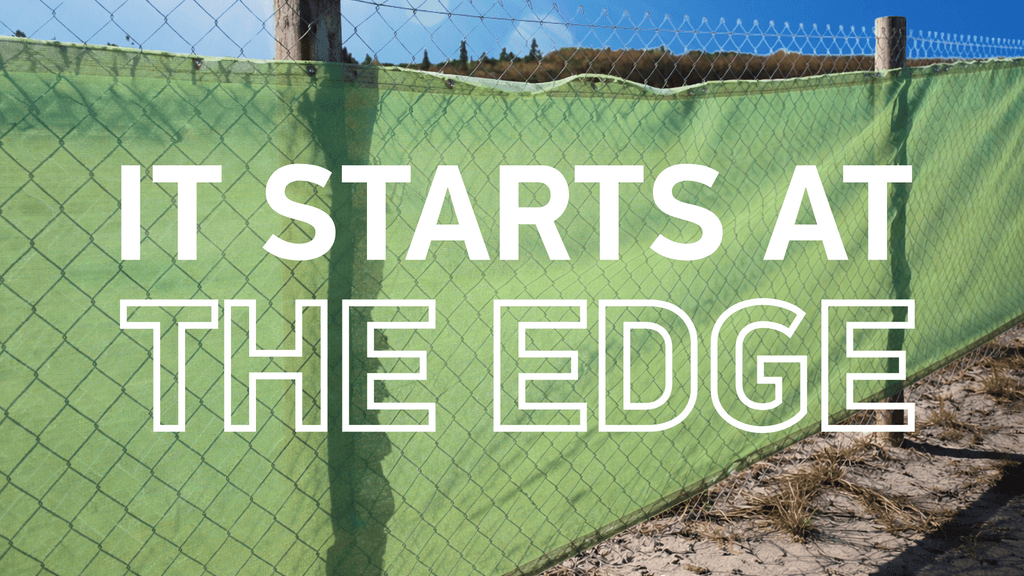
By reinforcing the edge — where failures most commonly occur — EdgeX significantly reduces the frequency of common banner mesh issues. Panels are less likely to flap after strong winds, corners hold their shape, and the need for repeated patch repairs is minimised.
A tight, clean, professionally presented perimeter signals confidence. It suggests a well-managed project and a developer who cares about detail. A sagging, distorted fence line quietly suggests the opposite — even if the build behind it is exceptional. In that sense, the fence line isn’t just site infrastructure. It’s part of the product you’re bringing to market.

EdgeX isn’t a design upgrade. It’s brand governance — a way of controlling the cues your site sends long after installation, when perception is shaped by maintenance, alignment, and restraint rather than messaging alone (Aaker & Joachimsthaler 2012; Keller & Swaminathan 2019).