Missing Information Becomes Obvious When Someone Asks For Proof
Reporting deadlines have a way of exposing the information no one thought to collect months earlier.
You’re working on a government project and the reporting requirements land in front of you. Buried among the usual project information are questions you can’t answer.
Was the material reusable? Could it be recycled? Where was it manufactured? What happened to it when it came off site? Can you prove any of it?
Now you’re searching project folders, digging through old emails and going back to suppliers for information about products purchased months ago. What looked like a few simple questions has suddenly become another job. But those questions are there for a reason.
Government and private sector projects are looking more closely at circularity, waste reduction, material sourcing, environmental performance and end-of-life outcomes. It is no longer enough for a product to simply do the job. Project teams increasingly need to understand where it came from, what happens to it afterwards and whether there is evidence to support those claims.
Which is why those questions need to be asked before a product is specified, not months later when the report is due.
Where was it made? How was it manufactured? Can it be reused? Can it be recycled? What happens at end of life? Can the supplier provide the documentation to prove it?
Yes, it adds another consideration to procurement. But having those answers upfront is far easier than trying to reconstruct them months later. When reporting time comes, the information is already there.
Why Supplier Information Matters More Than Ever
Historically, supplier information was largely focused on product specifications, compliance certificates and pricing. Today, that information is still important, but it is no longer the only information being requested.
Frameworks such as the Commonwealth Environmentally Sustainable Procurement Policy (ESPP), increasing ESG reporting requirements and broader sustainability initiatives are driving greater interest in areas such as product lifecycle, reuse opportunities, recycling pathways, local sourcing and waste reduction.
Products that were once viewed as temporary construction consumables are now becoming part of larger conversations around procurement, circularity and environmental performance.
This shift means project teams are increasingly looking for suppliers who can explain not only what a product does on site, but also where it comes from, how long it can remain in use and what happens to it when the project is complete.
As reporting expectations continue to grow, the quality and accessibility of supplier information is becoming just as important as the product itself.
Why Reuse Is Becoming Part Of The Conversation
One area receiving increased attention is product lifespan. For many organisations, sustainability conversations are moving beyond simple questions of recyclability and towards broader discussions around resource efficiency and material consumption.
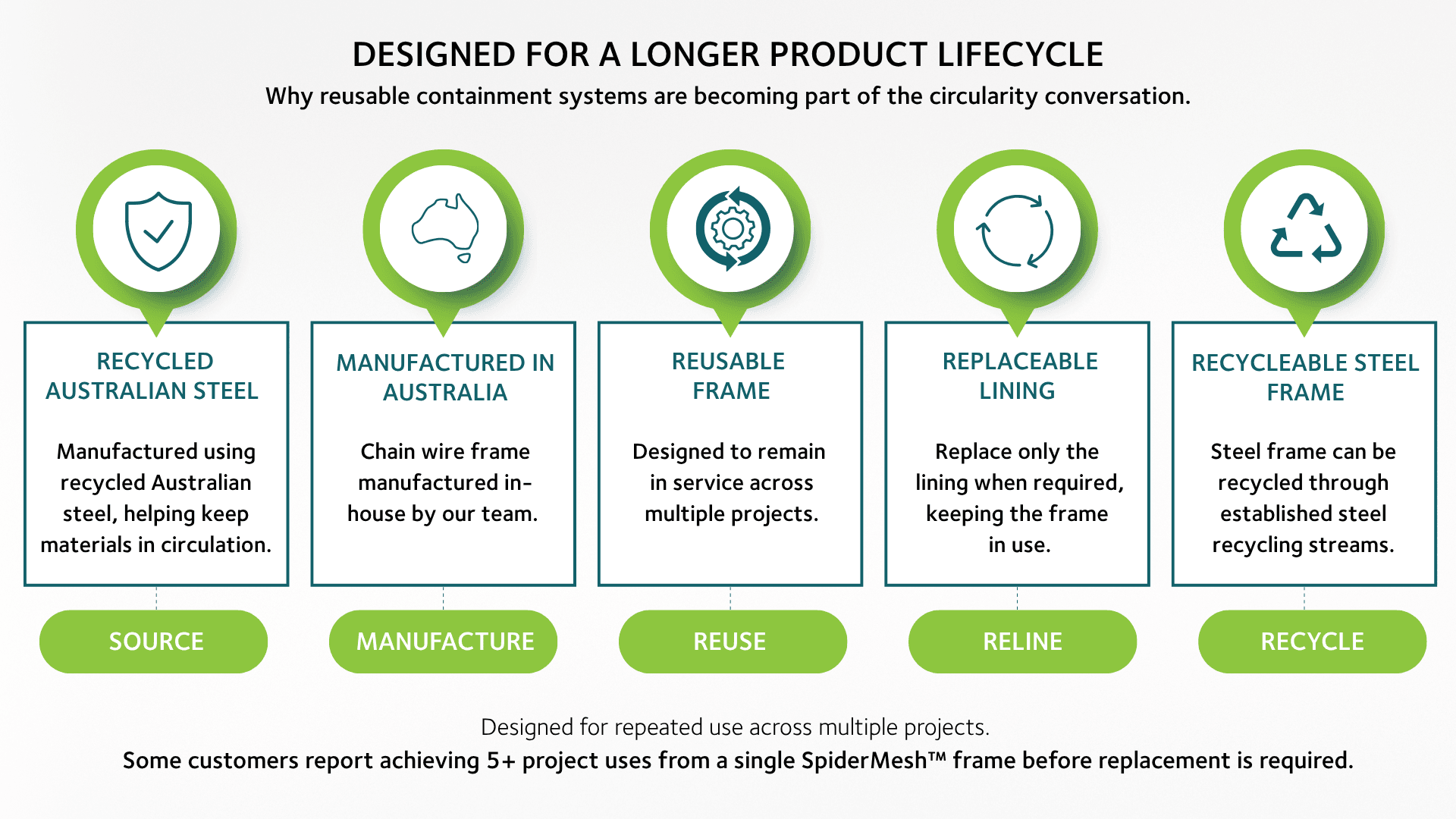
Instead of asking only whether a product can be recycled at the end of its life, project teams are increasingly considering how long that product can remain in use before replacement is required. Reusable containment systems are one example of this shift in thinking.
SpiderMesh™ has been designed so the steel chain wire structure can remain in service across multiple projects, with only the lining replaced when required. Some customers report achieving five or more project uses from a single unit before replacement is needed. This type of extended product lifecycle can help reduce material turnover while providing project teams with a clearer circularity story for reporting purposes.
While every project is different, the broader trend is clear: organisations are becoming increasingly interested in products that support reuse, longevity and reduced replacement frequency.
Why Documentation Is Becoming Just As Important As The Product
One of the biggest challenges in ESG reporting is evidencing what actually happened. It's one thing to state that a product is recyclable. It's another to demonstrate where it was recycled, how it was managed and what documentation exists to support the outcome.
The same applies to sourcing information, environmental certifications, waste diversion initiatives and operational sustainability measures.
Without supporting documentation, sustainability information can become difficult to verify and harder to use in procurement assessments, reporting frameworks and tender submissions. This is why supplier documentation is becoming increasingly important throughout the construction industry.
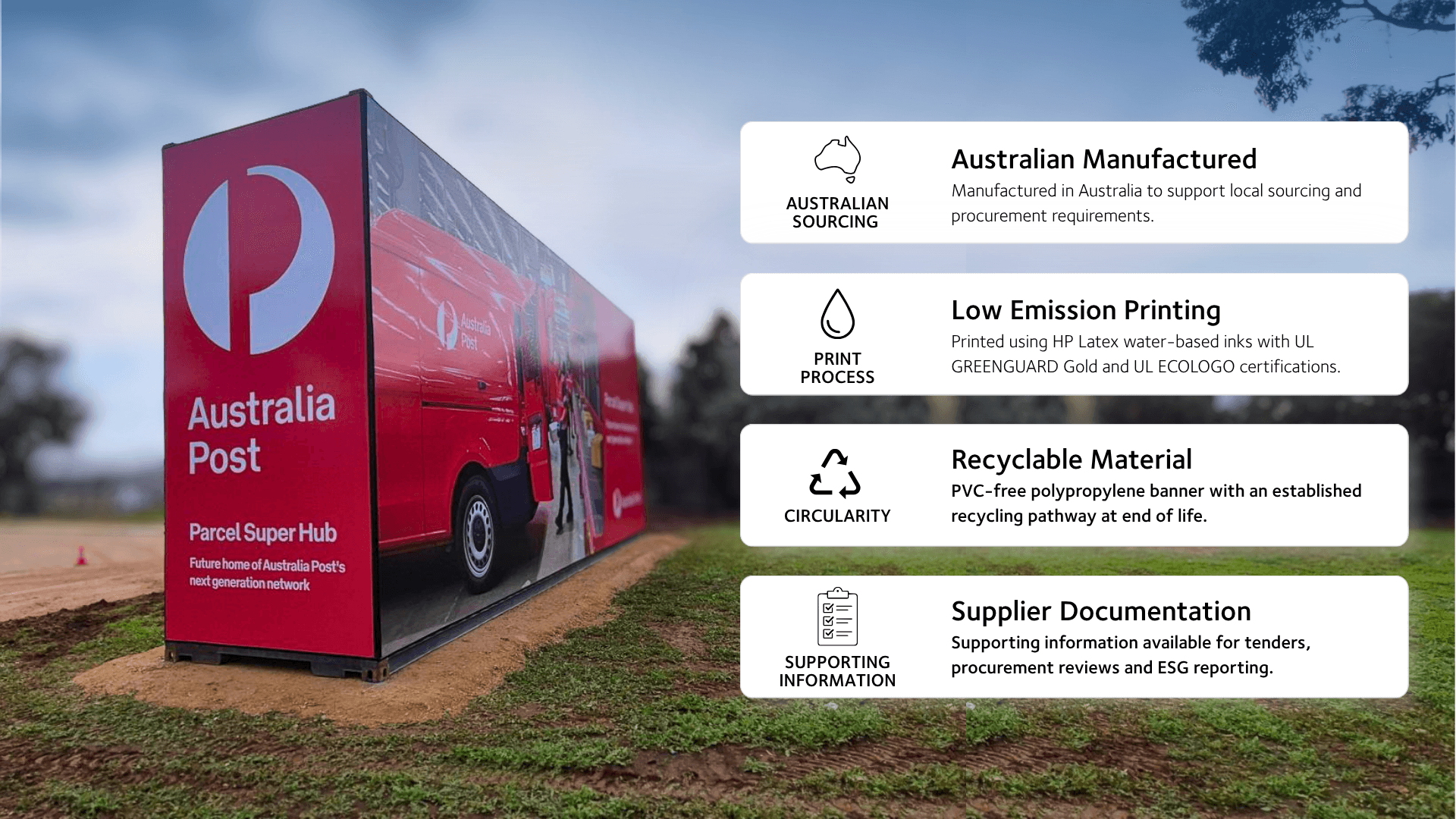
The organisations helping simplify reporting are often the organisations making information easier to access. For example, Sitemax provides project-based signage removal and disposal services, with written disposal confirmation records available where needed. We can also provide supporting information relating to Australian sourcing, operational sustainability initiatives, product environmental specifications and print process certifications.
The Information Gap Is Real
Environmental and procurement teams already manage significant complexity across modern construction projects. Adding ESG reporting requirements introduces another layer of information that must be collected, reviewed and maintained throughout the project lifecycle.
The challenge is not necessarily that suppliers lack sustainability initiatives. More often, the challenge is that information is scattered across websites, product data sheets, certificates, emails and conversations. When information is difficult to locate or verify, reporting becomes more time-consuming than it needs to be.
Conversely, when supplier information is clear, organised and supported by evidence, project teams can spend less time chasing answers and more time focusing on project outcomes.
The Suppliers Helping Simplify Reporting Will Stand Out
As ESG requirements continue to mature across the construction industry, supplier transparency is likely to become increasingly valuable. Not because organisations are looking for more sustainability claims. Because they are looking for better sustainability information.
Information that can support procurement decisions. Information that helps answer reporting questions. Information that can be verified when required. And information that makes the lives of project teams easier.
Effective ESG reporting doesn't start with the report itself. It starts with the quality of the information available throughout the project lifecycle.
The suppliers helping make that information easier to access may ultimately become some of the most valuable partners on a project.
What's Coming Next?
Good ESG reporting starts with good information.
We've recently developed the Sitemax Sustainability Credentials Pack. A practical resource designed to help project teams access key sustainability information, certifications and supporting documentation in one place.
You can view and download the document on our sustainability page.