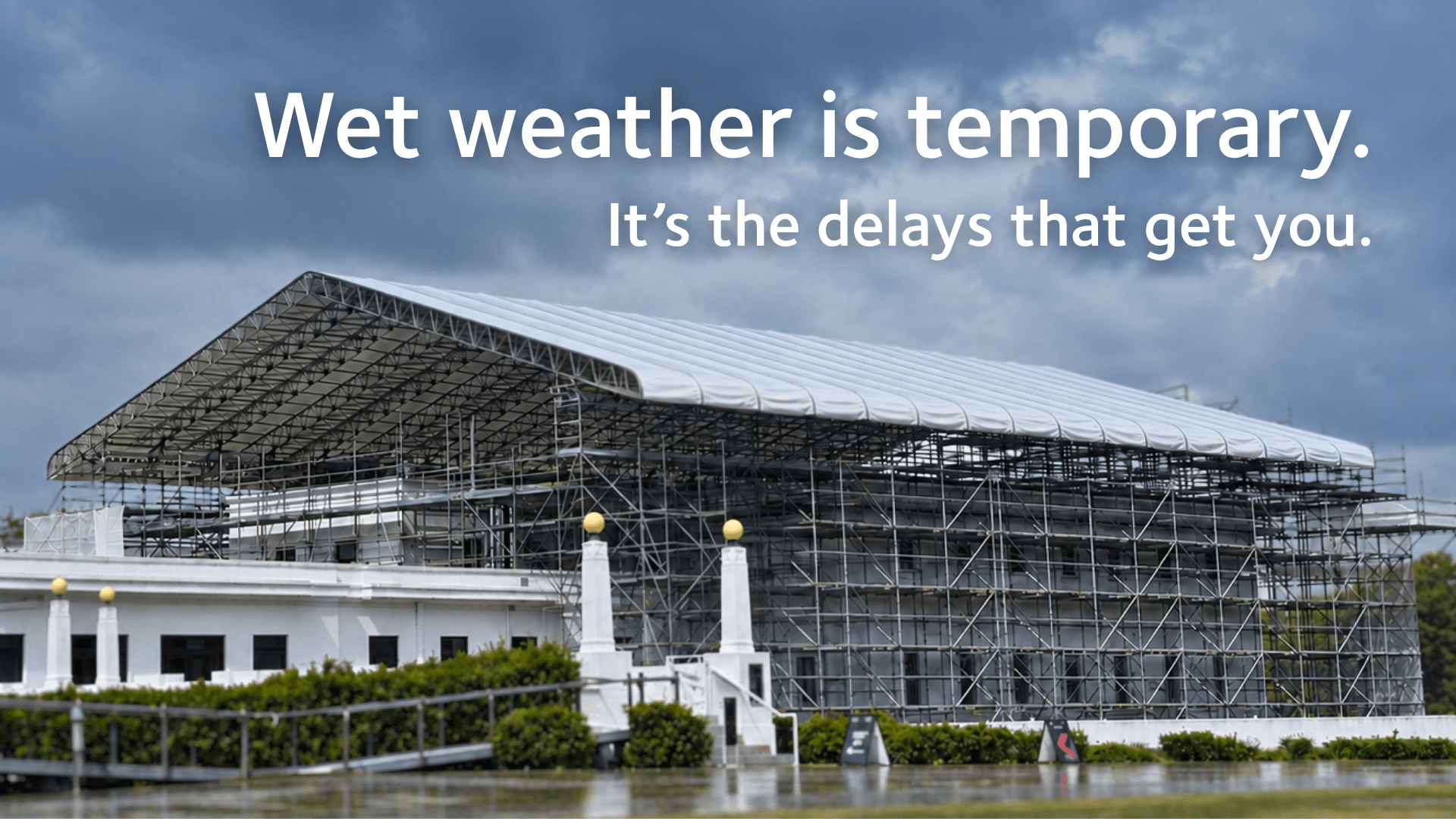
Construction programs rely on momentum. Trades need access to the right work areas, materials need to be ready when required, and each activity needs to happen closely enough to schedule for the next one to begin.
Wet weather can interrupt that momentum surprisingly quickly.
A few hours of rain may affect one work area, but the impact can extend much further. Access becomes restricted. Materials need to be moved or covered. Work fronts become unavailable. The trades scheduled behind the affected activities are often pushed back.
While the weather may be temporary. The program disruption caused by the delays often isn’t.
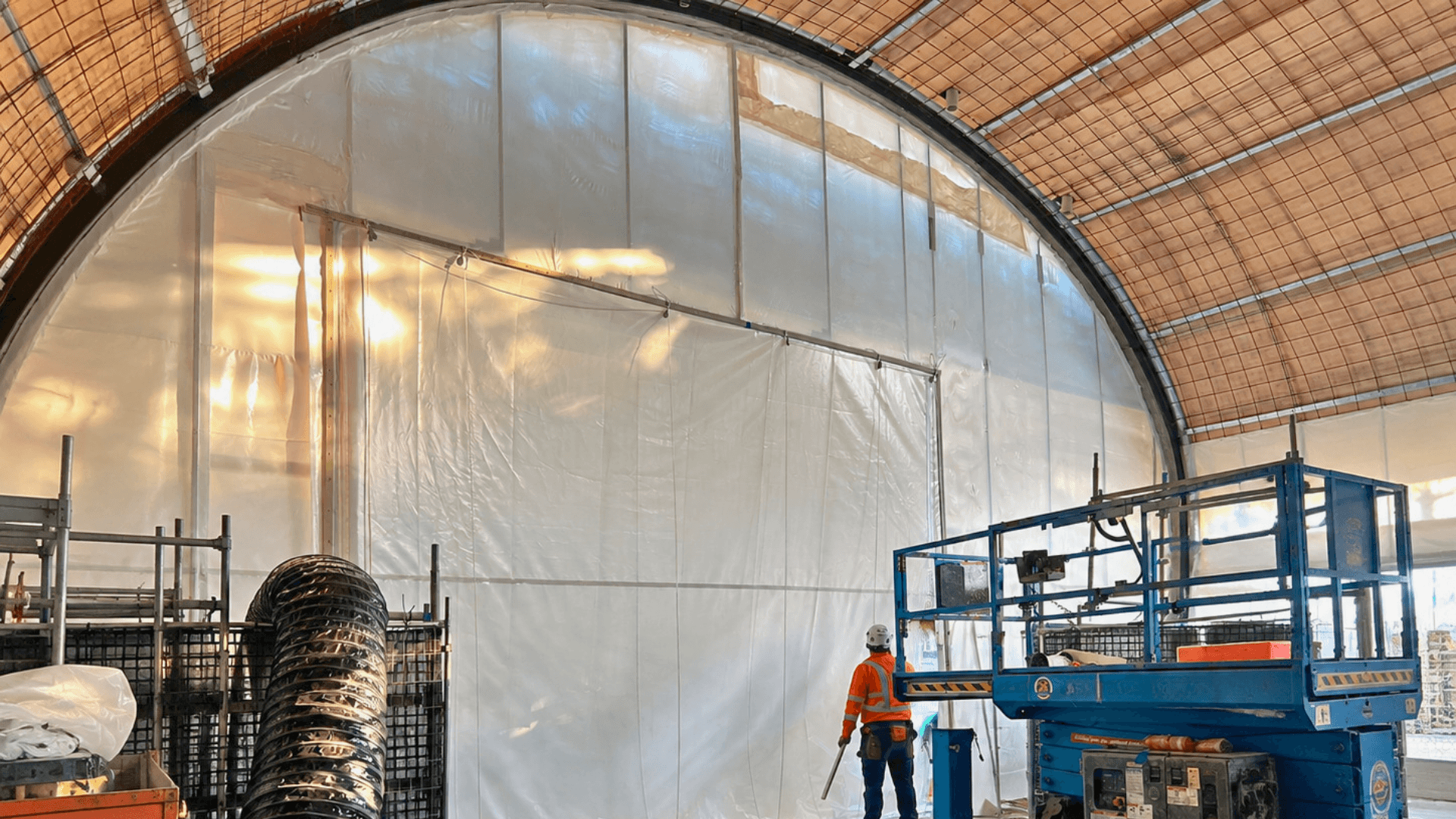
One exposed area can affect much more than one task
Imagine a scaffolded work area with multiple trades.
Rain prevents one crew from continuing, which delays the activity following them. Labour gets moved elsewhere. Materials remain on site longer than planned and are left more susceptible to damage. Supervisors adjust sequencing while trying to protect the projected timeline.
The wet weather passes, however, everything does not automatically return to schedule. Crews still need to catch up on the work that was missed while maintaining the activities already planned for that day.
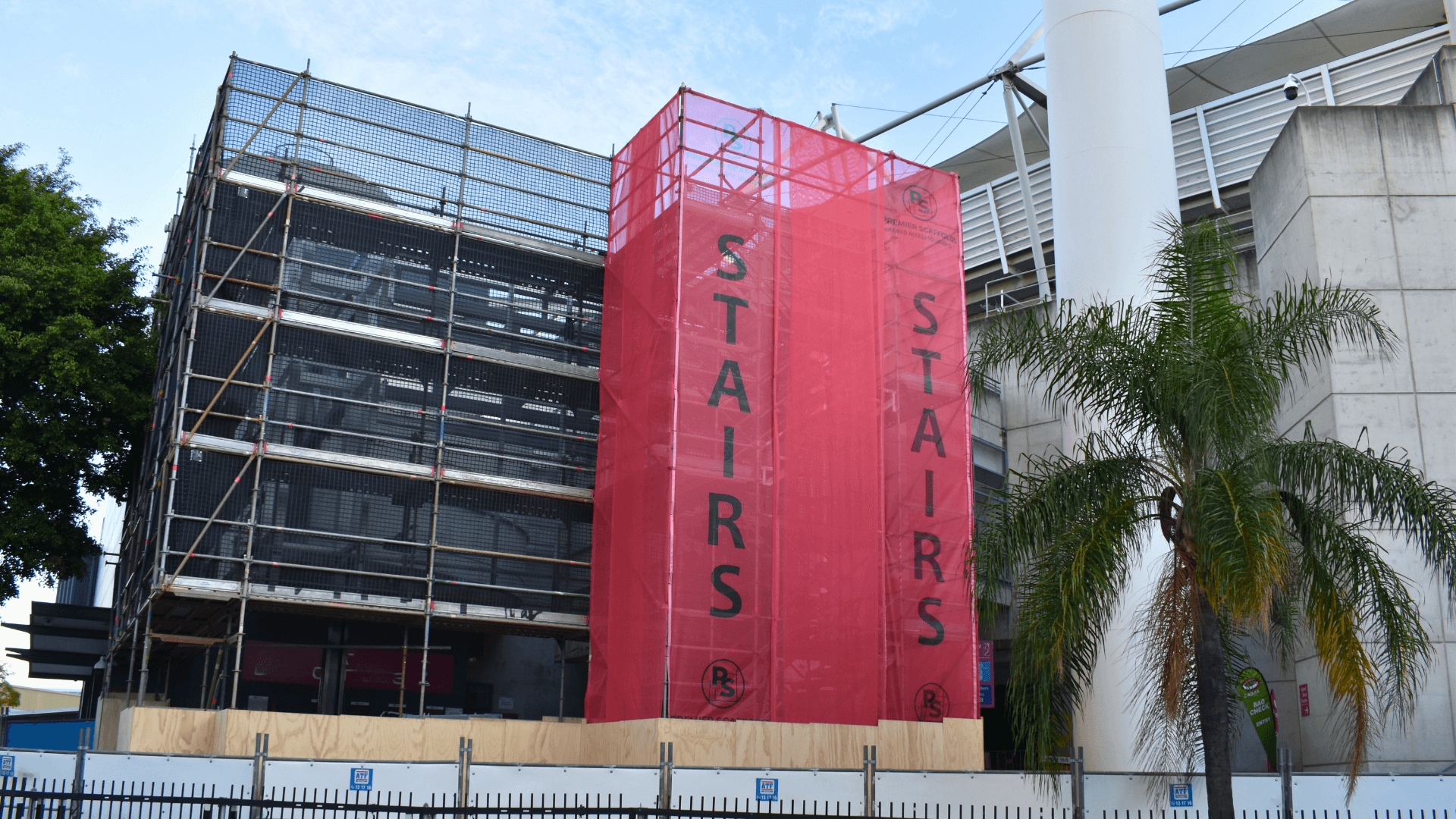
Similar problems can occur when temporary stairs become wet, water enters unfinished areas or completed works remain exposed. Small areas can carry a surprising amount of program risk when other activities depend on them.
Protect what needs to keep moving
Weather protection becomes more valuable when project teams stop asking, “How do we cover the site?” and start asking:
What needs to stay operational if the weather turns?
Priority might sit with a main access tower used by hundreds of workers each day. On another project, it could be facade works tied to a critical milestone, equipment that cannot tolerate prolonged exposure, or completed works vulnerable to water ingress.
Not every part of a construction site needs the same level of protection. Through identifying the areas most likely to create flow-on delays, this allows weather protection to be targeted where it can have the greatest impact on project continuity.
Match the protection to the project
The right weather solution depends on the application, site exposure, duration and level of containment required for that specific site.
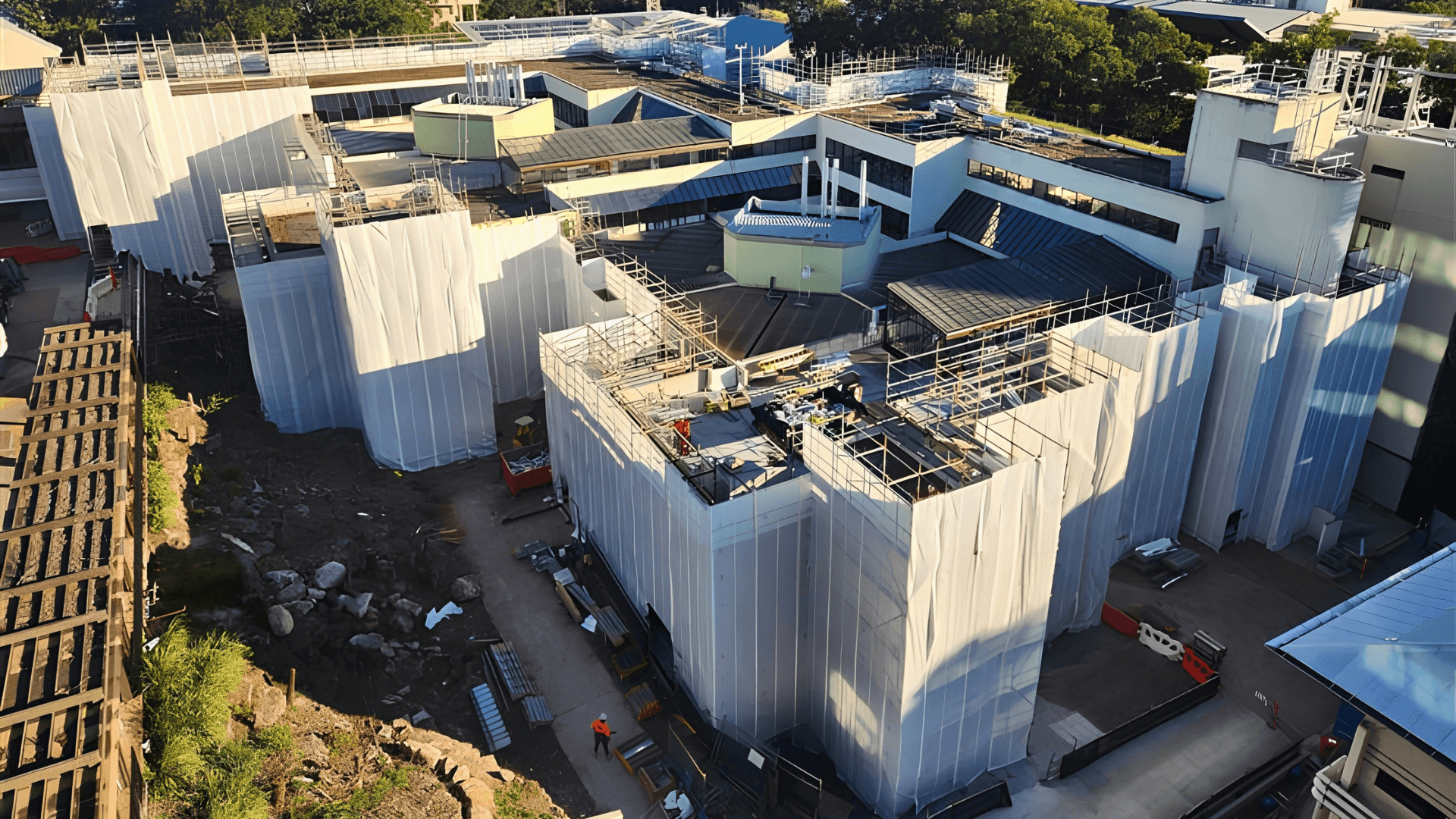
Scafclad™ provides versatile scaffold encapsulation for weather, dust and environmental containment. For weatherproofing applications, upper sheets can overlap lower sheets to reduce rain entering through the joins
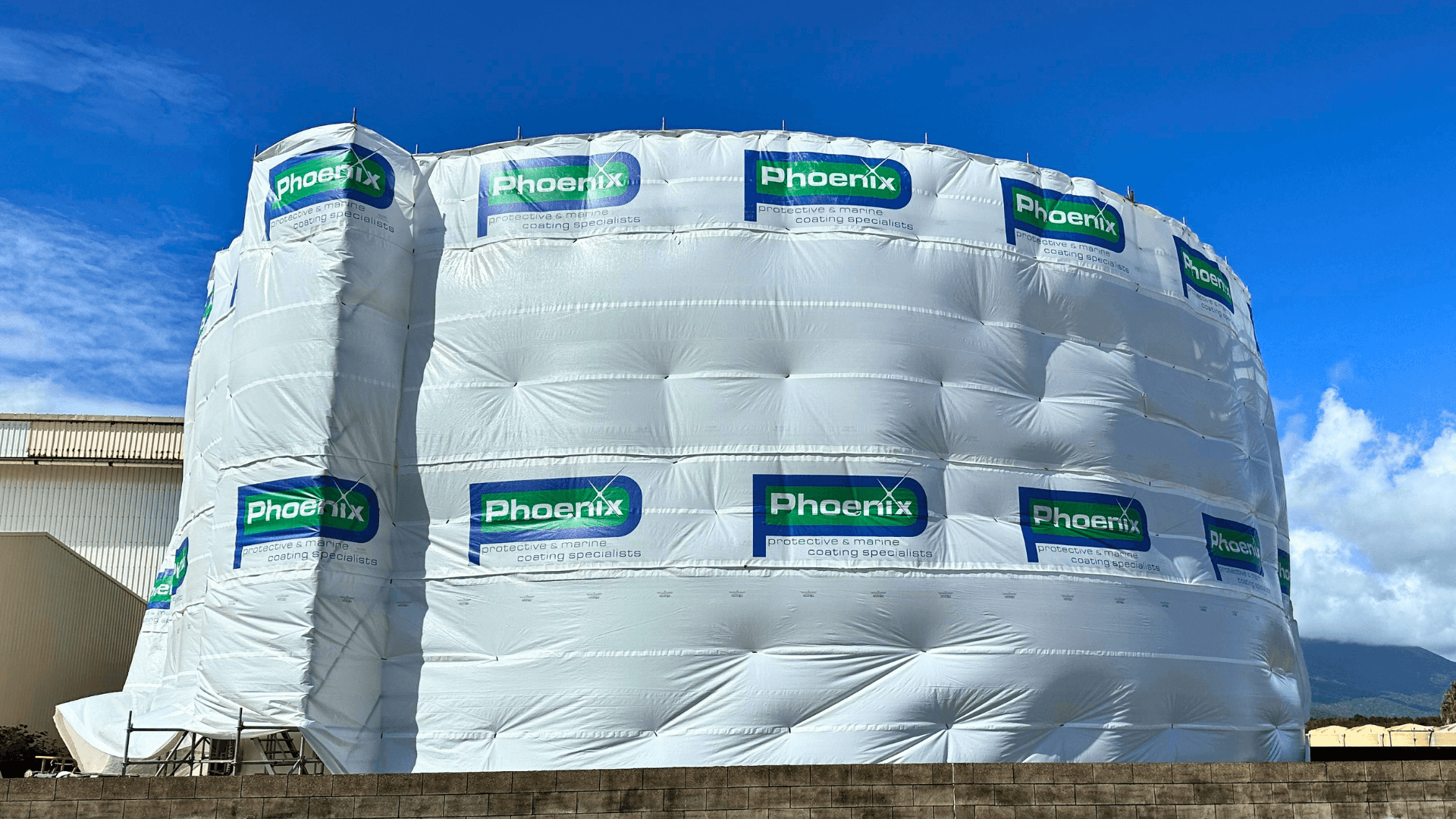
Shrinkclad™ creates a tighter enclosure by heat-shrinking polyethylene around the scaffold or structure. Overlapping sheets can be heat welded and joins sealed where a closer level of containment is required
Tuffclad™ provides a heavier-duty option using 680gsm PVC-coated ripstop polyester, suited to longer and more demanding applications requiring a more substantial temporary barrier.
Product choice should come after understanding what needs to be protected and the conditions that area is likely to face.
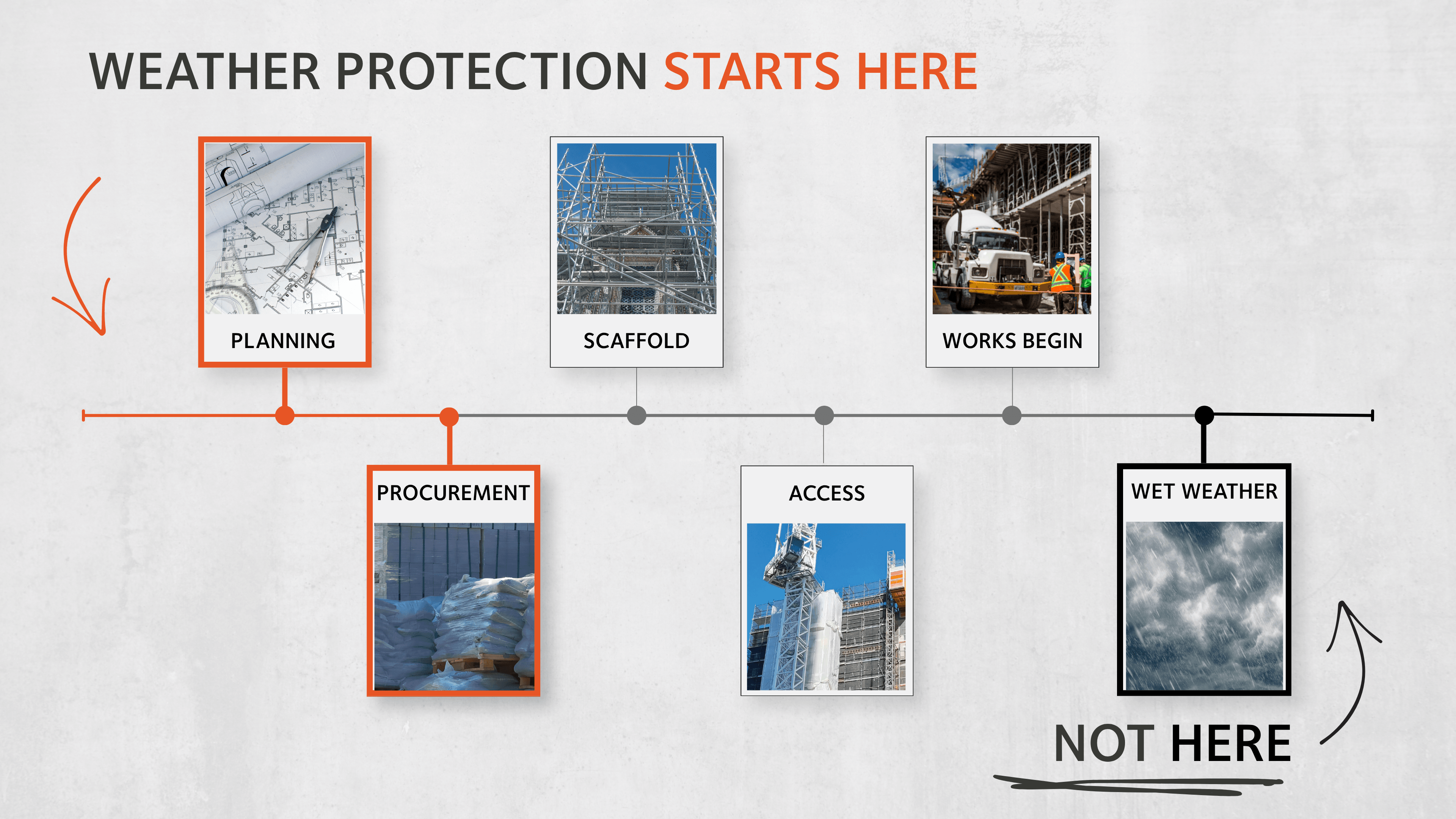
Weather protection starts before the forecast
Waiting until heavy rain appears in the forecast may leave project teams with fewer, more reactive options.
Scaffold may already be installed. Access arrangements may be fixed. Procurement decisions may already have been made. Retrofitting a different containment solution can then require additional engineering, labour and coordination at exactly the time the project is trying to prepare for the forecast weather.
Solid scaffold encapsulation also changes wind loading on the supporting structure, which means weather protection cannot always be treated as a simple material change. Scafclad installation requirements state that supporting scaffolds and structures must be engineered to account for the additional wind loading created by encapsulation.
Bringing weather protection into scaffold and project planning earlier gives teams more time to understand where exposure could create downtime and select an appropriate solution before the weather becomes urgent.
Keep the project moving when the weather turns
No containment system can remove weather risk entirely.
Good planning can, however, reduce how exposed critical parts of the project are when conditions change.
Protecting access, work fronts, materials and completed works gives project teams more control over the areas their construction program depends on.
Plan for exposure before it becomes downtime.
Book in a time to speak with our Sitemax containment specialist about the right weather protection for your project.