
Circularity Is Changing Construction Reporting
Circularity is becoming one of the biggest topics in construction sustainability, but for many project teams, it's also one of the least understood.
Procurement teams, sustainability managers and project stakeholders are increasingly being asked not just what products are made from, but what happens to them throughout their entire lifecycle. That includes how long products remain in use, whether they can be reused, how they're recovered at end of life, and what evidence is available to support reporting.
As reporting requirements continue to evolve, selecting the right product is only part of the equation. Having the information to support procurement decisions, sustainability initiatives and ESG reporting is becoming just as important.
The challenge is that while many organisations understand the concept of circularity, fewer understand what information suppliers can contribute to help support it.

What Information Supports Circularity Reporting?
One of the biggest challenges facing project teams isn't necessarily identifying sustainable products, it's gathering reliable information.
Suppliers are increasingly being asked to provide details relating to product lifespan, reuse opportunities, recycling pathways, end-of-life management and potential waste diversion outcomes. Supporting documentation is becoming just as important as the product itself.
This information helps project teams better understand how materials move through a project's lifecycle while supporting procurement decisions, sustainability initiatives and reporting requirements.
The goal isn't simply to know whether a product can be recycled.
It's to understand how waste can be avoided in the first place, and what happens to materials once they eventually reach the end of their useful life.

Circularity In Practice
There isn't one approach to circularity. Depending on the product, the opportunity might be to extend its life through reuse, or to ensure a practical recovery pathway exists once it reaches the end of its useful life. Both approaches support the same objective: reducing waste and keeping materials in use for longer.
Reuse: Extending Product Life
One example of this method is reusable scaffold containment systems.
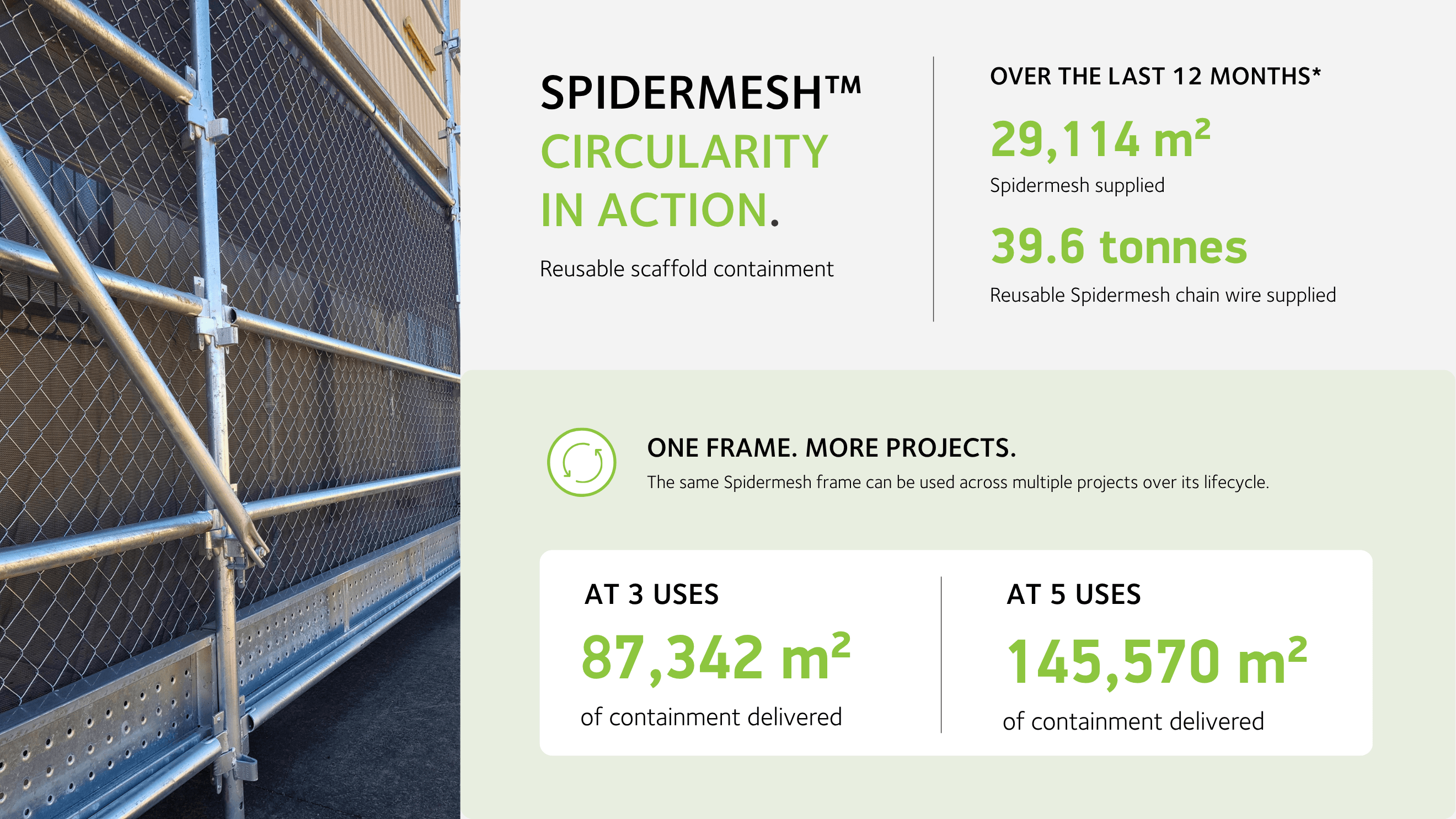
SpiderMesh™ has been designed so the steel chain wire frame can remain in service across multiple projects, with only the containment liner replaced when required. This reduces replacement frequency while extending the useful life of the primary structure.
For project teams, this provides a practical example of how reuse can contribute to circularity outcomes by helping demonstrate:
- Extended product life
- Reduced material consumption
- Potential waste diversion
By measuring reuse across multiple projects, organisations can begin reporting on outcomes that go beyond traditional recycling metrics.
Recovery & Recycling: Creating Practical End-Of-Life Pathways
Reuse sits higher in the waste hierarchy, but recycling still plays an important role in supporting circularity.
One of the most common misconceptions in sustainability discussions is that recyclable automatically means recycled. In reality, successful recycling depends on collection systems, recovery pathways and what happens to a product once it leaves site.
Let's use temporary construction signage as an example..
Historically, conversations focused on installation, durability and visibility. Today, project teams are increasingly asking what happens once signage is removed, and whether those outcomes can be measured, documented and reported.
EnviroSign™ provides a practical example of how circularity extends beyond product selection.
Manufactured from recyclable materials including corflute, polypropylene, aluminium and galvanised steel, EnviroSign™ also incorporates environmentally conscious print production using HP Latex technology. The water-based inks carry UL ECOLOGO® and GREENGUARD Gold certifications, supporting lower-emission printing outcomes.
But most importantly, circularity doesn't stop at the product itself.
Sitemax also provides signage removal, collection and disposal support, helping project teams better manage signage at end of life.
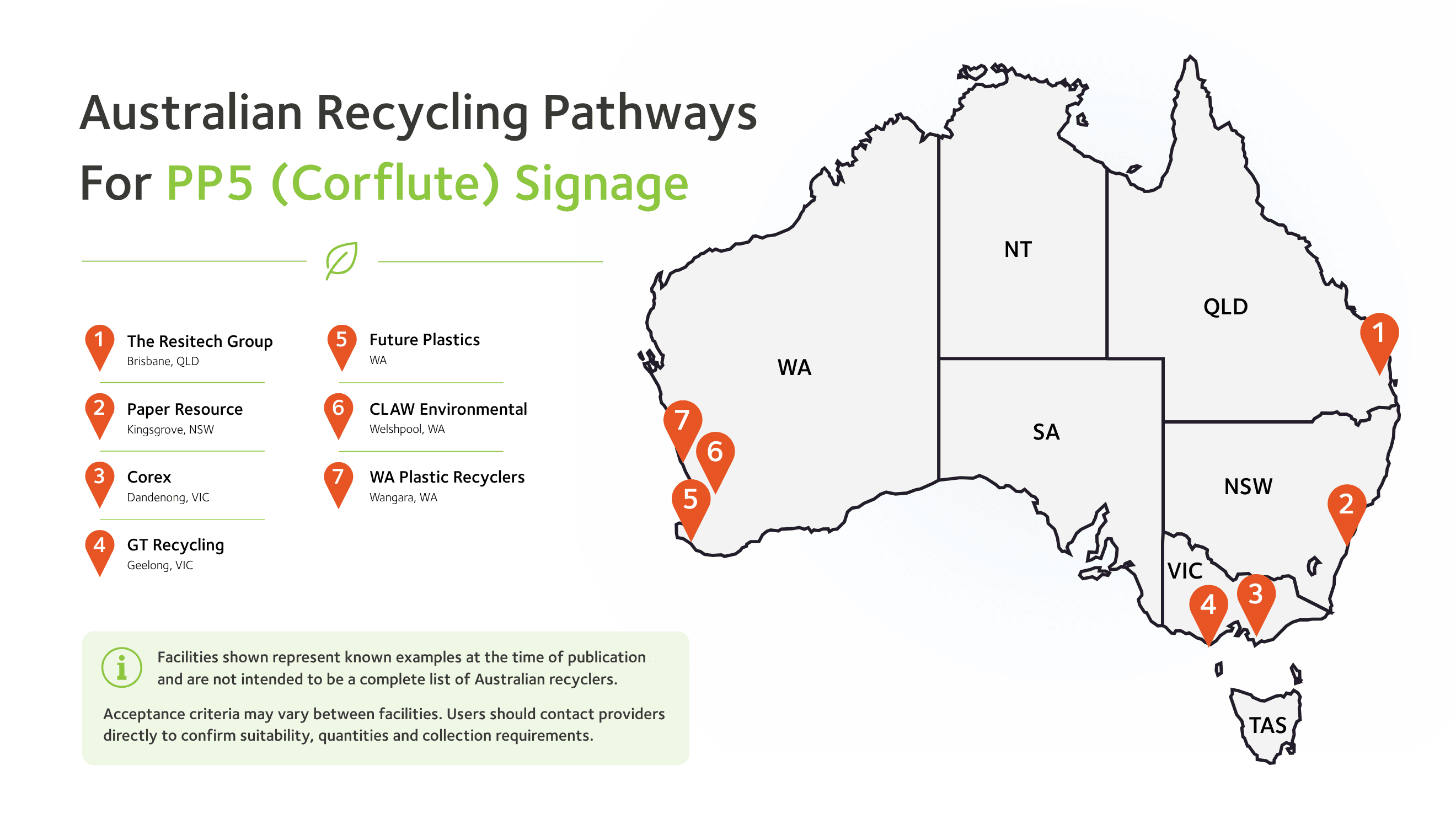
Eligible EnviroSign™ materials can be returned to Sitemax, where we coordinate their transfer to Resitech in Brisbane, providing project teams with a practical and documented recycling pathway.
For project teams, this provides more than a recyclability claim.
It provides a documented recovery pathway that can support lifecycle planning, sustainability initiatives and project reporting.
Looking Beyond Disposal
One of the biggest shifts in construction sustainability is moving from waste management to resource management. For procurement and sustainability teams, this means asking different questions of suppliers.
It's no longer enough to understand what a product is made from.
Increasingly, they're looking for evidence of product lifespan, reuse opportunities, recovery pathways and the documentation needed to support project reporting.
That's where suppliers can play an important role.
Not simply by supplying products, but by providing the information that helps project teams understand lifecycle outcomes and report them with confidence. Meaningful circularity reporting doesn't start at disposal, it starts with understanding the entire journey of a product, from installation through to its next use, recovery or recycling pathway.
Supporting Better Circularity Reporting
Better circularity reporting starts with better supplier information.
Often, it begins by asking a few simple questions:
- Can this product be reused?
- Can it be recycled?
- Is there a documented recovery pathway?
- What information is available to support reporting?
Working with suppliers who can answer those questions makes it easier to understand product lifecycles, support procurement decisions and strengthen sustainability reporting.
At Sitemax, we're continuing to expand the sustainability information, reuse data, recycling pathway guidance and supporting documentation available across our signage and containment product range.
Because the goal isn't simply to talk about circularity.
It's to help project teams understand, measure and report it with greater confidence.