Branding doesn’t end at approval — it begins on site.
Project marketing teams pour enormous effort into the visible aspects of banner mesh — the renders, colours, typography and messaging that define a campaign and receive sign-off.
But once it’s installed on a live site, the brand stops being “a design” and becomes an experience — a set of visible cues people use to decide what kind of project (and developer) this is.
Marketing research has a name for this: Servicescape — the physical environment that influences how people interpret quality, professionalism, and trust. In servicescape research, the environment acts like a signal: people read what they see and infer what they can’t see (Bitner 1992).
And in signaling theory, those cues matter most when there’s information asymmetry — when the audience doesn’t know what’s behind the fence, so they judge what’s in front of it (Spence, 1973; Macchione Saes, et al. 2025).
That’s the construction site in a nutshell, and why a small detail like the edge can quietly reshape perception over time.
Small Signs Create Big Judgements
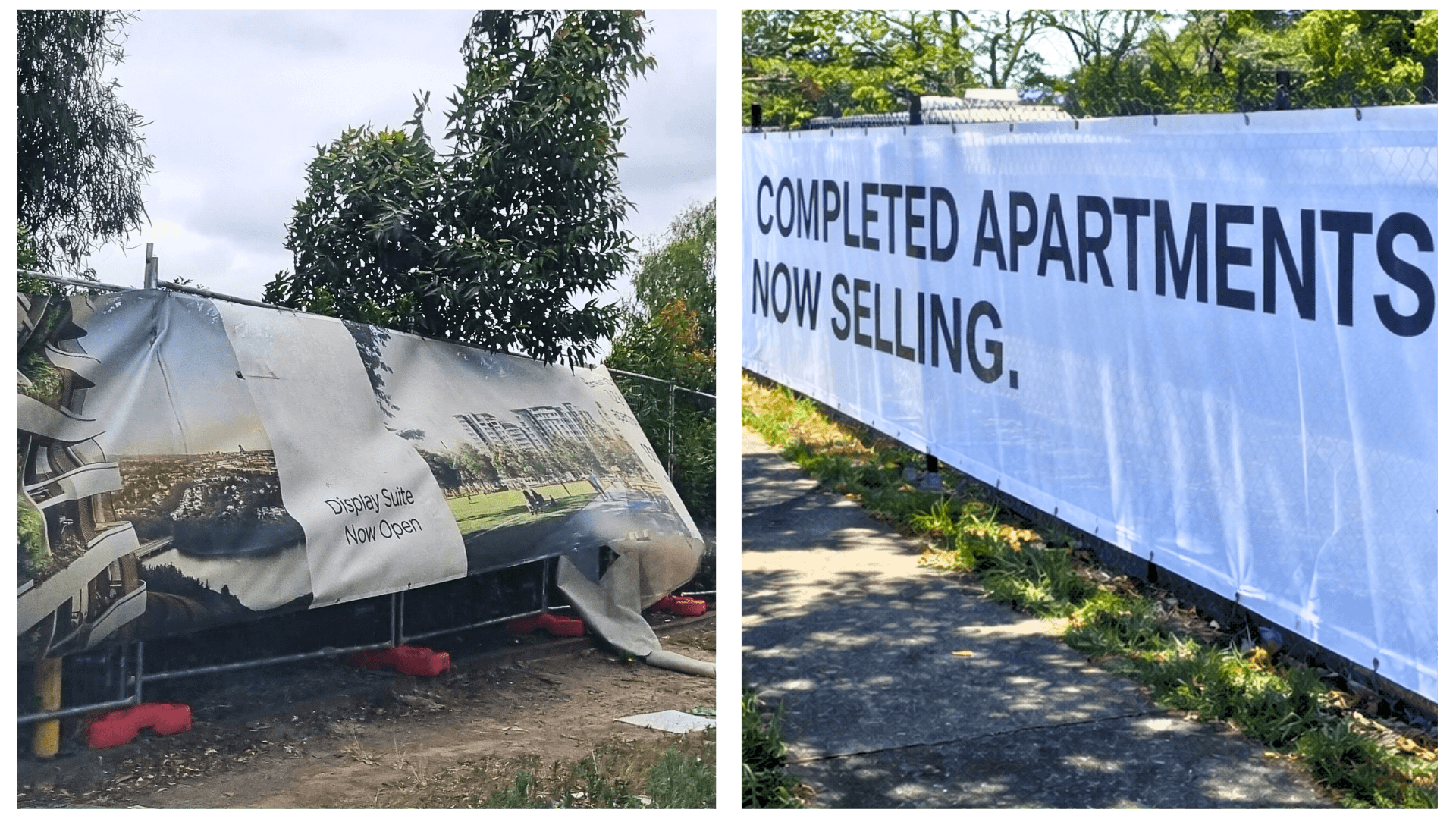
Traditional banner mesh edging is usually the same open-weave material as the mesh itself — typically white. On light artwork, it disappears. On dark designs, it doesn’t. It creates an unintended frame, changes contrast, and subtly makes premium artwork feel “cheaper” or more temporary.
Then wind and uneven tension take over. Flexible edges stretch. Panels bow. Lines drift. Logos that were dead-straight on screen start sitting slightly off on site. The artwork hasn’t changed — but the brand feels less controlled.
This idea — that small visual details influence big judgments — is backed by research into “disorder cues” in public environments. Studies commonly referenced under “broken windows” theory show that visible wear, damage, or poor upkeep leads people to perceive spaces as less controlled, less safe, and less credible (Lanfear, et al. 2020).
How Your Banner Mesh Edge Shapes Perception
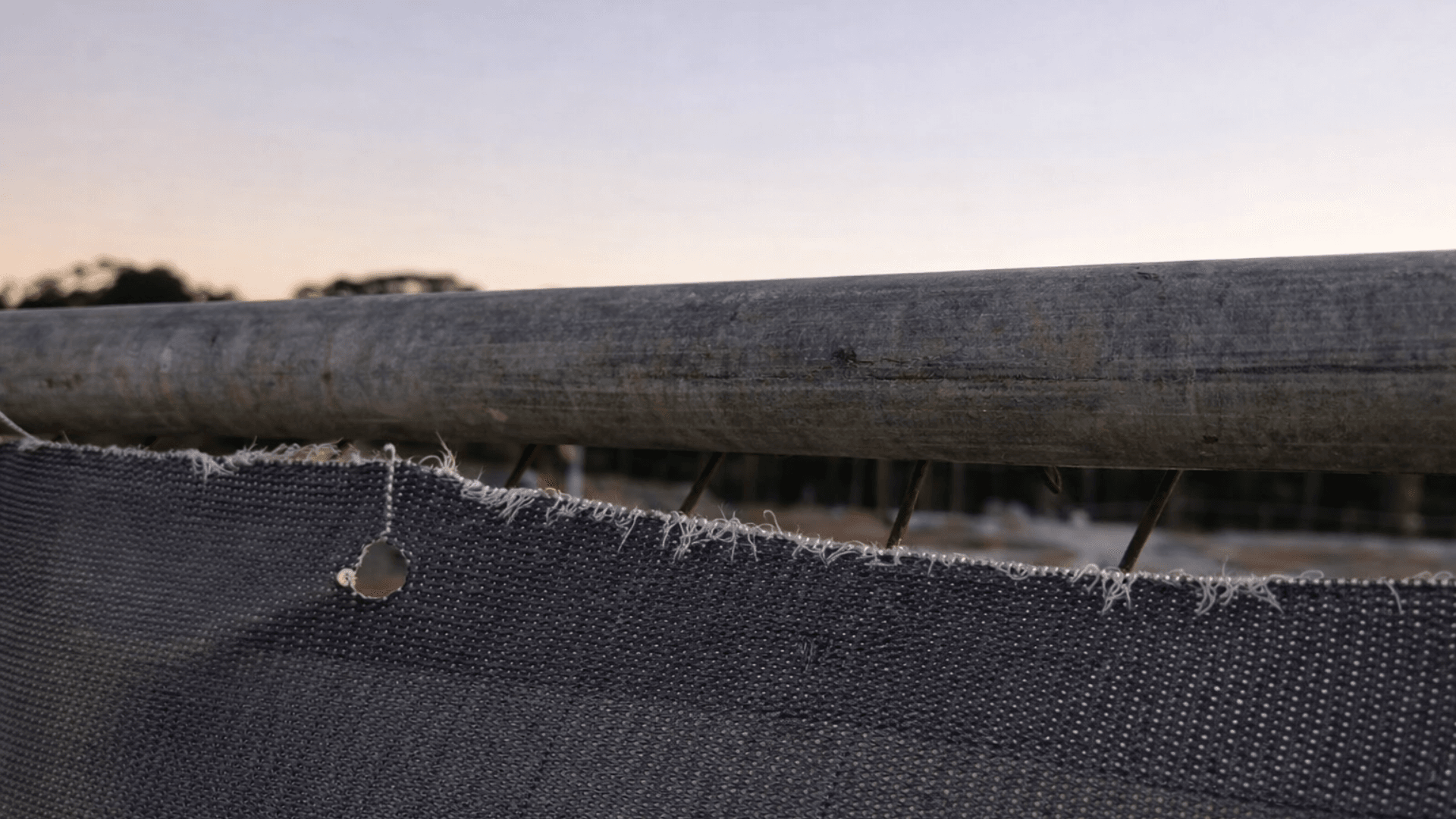
EdgeX replaces the flexible, visually intrusive edge found on traditional banner mesh with a heavy-duty, tight-weave black or white keder tape. The result is a clean, stable boundary that holds its shape under tension and stays visually quiet behind the design.
From a servicescape perspective, this matters. The fence line becomes part of the physical environment people use to judge the project. Clean edges, straight lines, and consistent tension signal control, quality, and professionalism. Loose edges, visible borders, and distortion introduce visual noise — subtle disorder cues that can quietly undermine how the site is perceived.
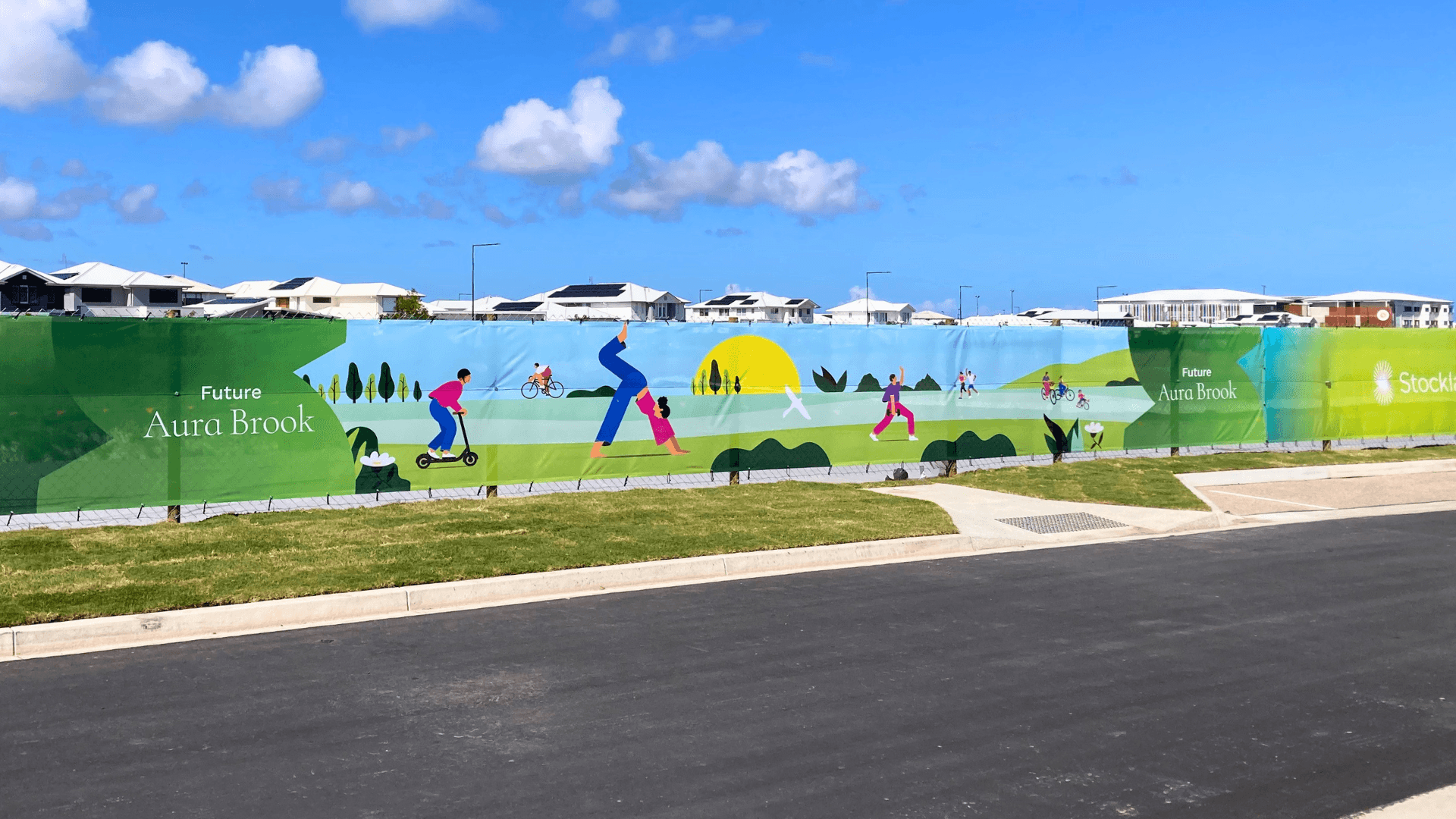
Black EdgeX disappears behind dark artwork, allowing branding to run confidently to the edge without a visible frame interrupting it. White EdgeX delivers the same uninterrupted finish for lighter designs. In both cases, the edge stops competing with the artwork and starts supporting it.
That stability also changes how the branding ages. Traditional edges stretch, bow, and pull unevenly over time, causing panels to drift and lines to lose alignment. EdgeX resists that movement, maintaining straight edges and consistent tension for longer.
So instead of the fence line gradually “evolving” into a distorted version of the campaign — introducing the kinds of disorder cues that research shows affect perception — it remains crisp, intentional, and controlled.
In servicescape terms, EdgeX helps ensure the environment continues to reinforce the message your brand is trying to send, rather than quietly working against it.
Why This Matters For Project Marketers (and Developers)
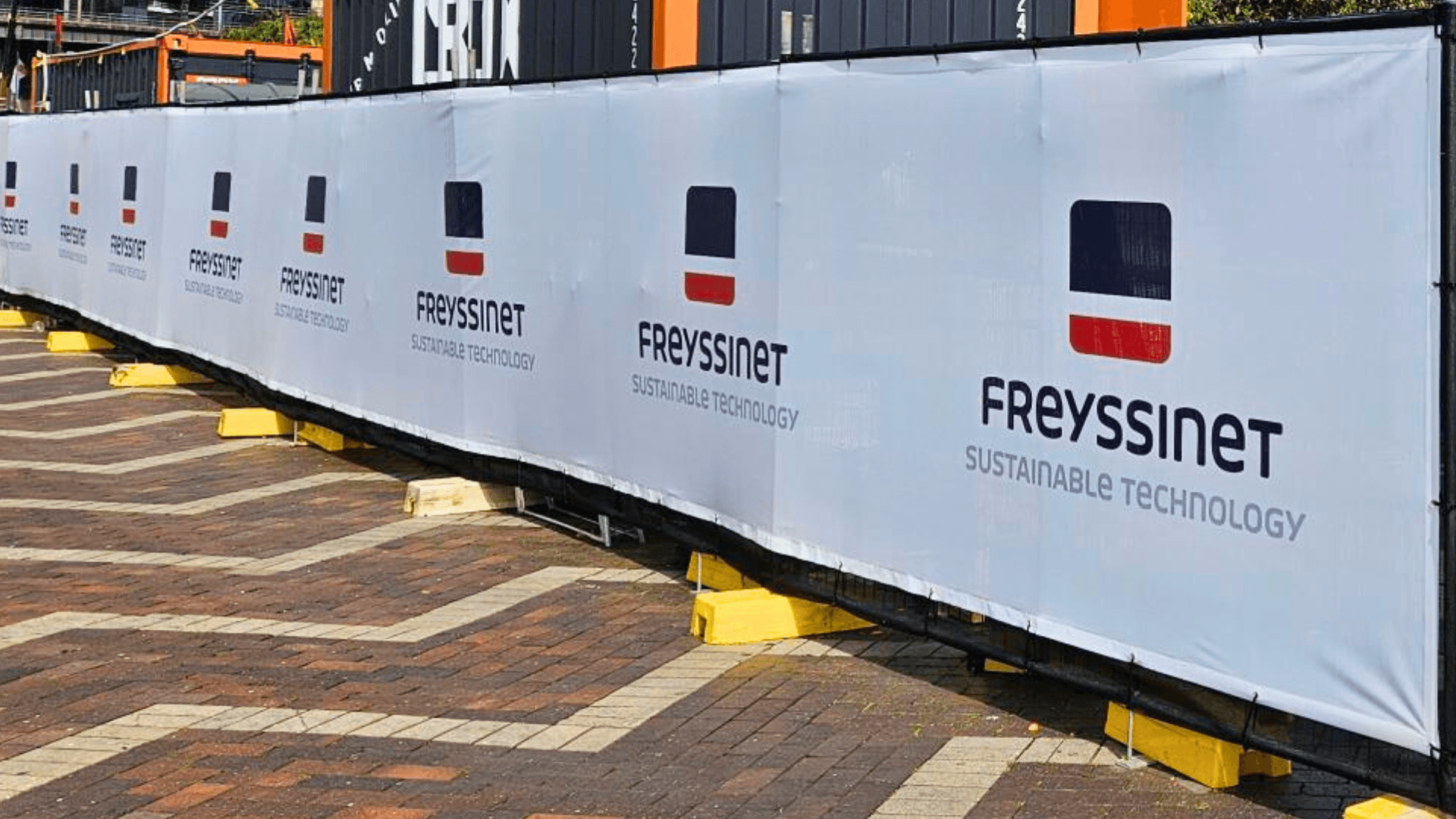
Your banner mesh doesn’t just sit on a fence - it becomes part of the project’s public record.
It appears in drone footage and progress videos. In property listings and investor updates. In PR photography, social content, stakeholder decks — and increasingly in the unfiltered, long-tail visibility of Street View and passers-by capturing the site on their phones.
These images don’t just document projects — they shape how a project is judged. Over time, they influence perceptions of professionalism, control, quality, and trust.
And here’s the shift most teams miss:
On a live site, branding isn’t a moment — it’s a condition.
The artwork you approve is only the starting point. What people actually experience is how that artwork holds up under real conditions: wind, tension, time, and exposure. When edges stretch, bow, or visually intrude, the signal quietly changes. The project doesn’t look unfinished — it looks less intentional.
That’s the difference between design and servicescape. Between what you launch and what the environment continues to communicate when no one is there to explain it.
EdgeX isn’t a design upgrade. It’s brand governance — a way of controlling the cues your site sends long after installation, when perception is shaped by maintenance, alignment, and restraint rather than messaging alone (Aaker & Joachimsthaler 2012; Keller & Swaminathan 2019).
Because the premium impression you paid for shouldn't peak at install. It should be governed - not left to weather, tension, and chance.
Protect The Brand You've Built
If your project relies on a premium first impression, don’t leave it to chance. Ask us how EdgeX helps maintain control, consistency, and credibility across the life of the build.