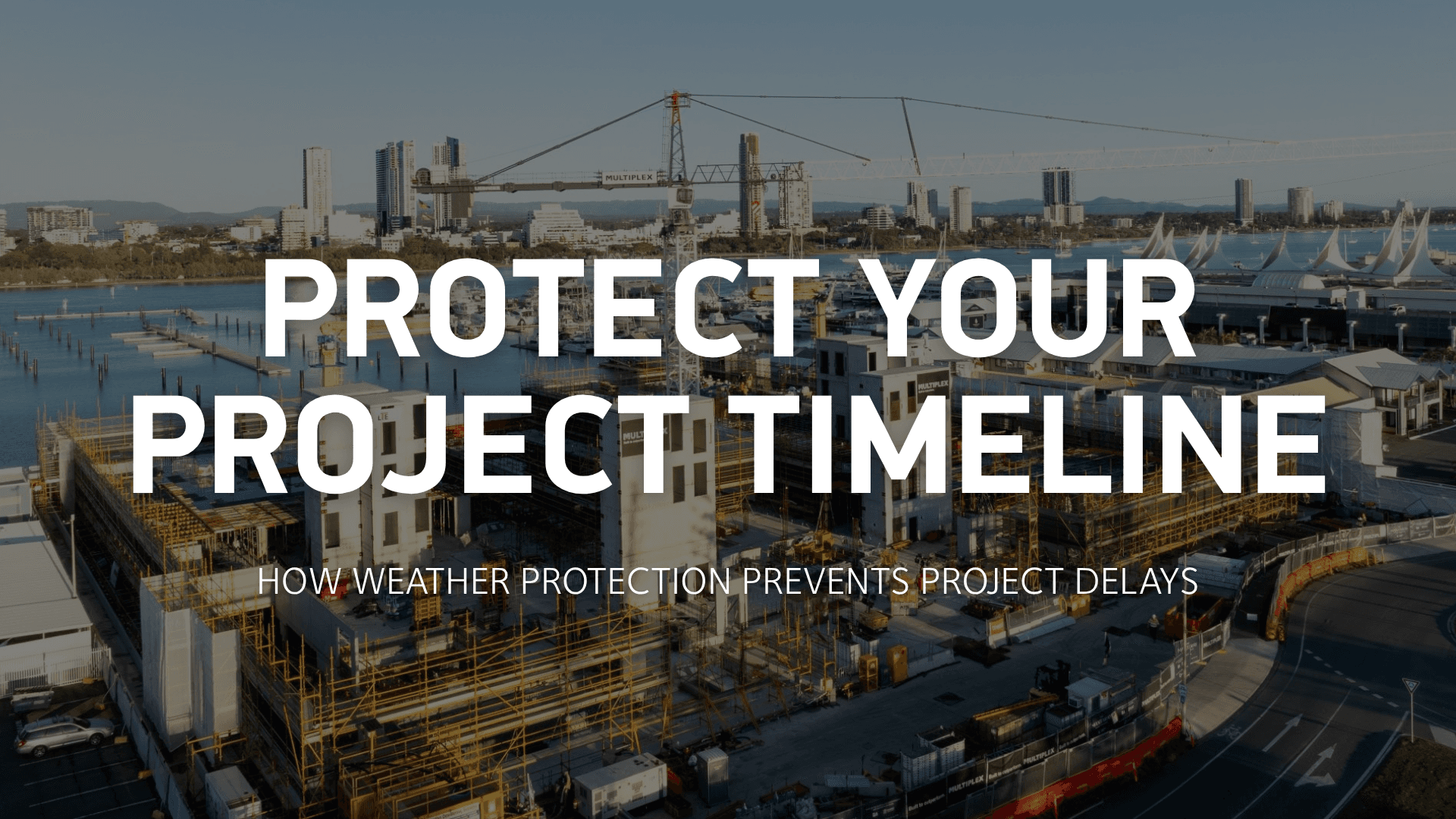
What Happens When Wet Weather Takes Out Your Main Access?
On a multi-storey project, a temporary stair tower is more than an access point. It is part of the site’s production infrastructure, carrying workers, supervisors, tools and materials between levels throughout each shift.
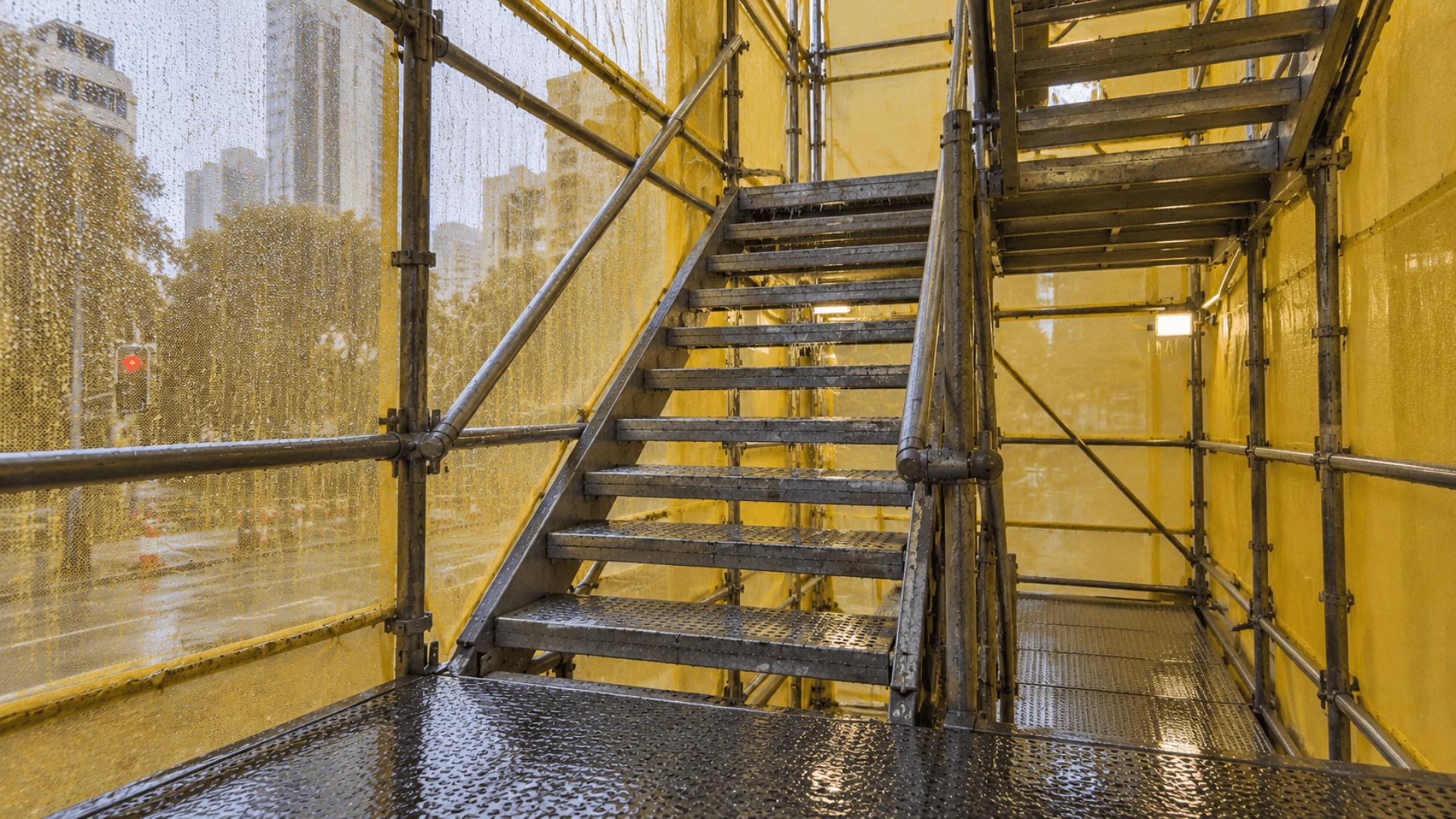
Yet weather protection around these stairs is often treated as a secondary consideration. A tower may be wrapped in shade cloth and appear enclosed, even though its accessways remain exposed to wind-driven rain.
After a night of bad weather, crews can arrive to find wet treads, slippery landings and water continuing to run through upper levels. Access may need to be restricted while stairs are inspected, cleared and allowed to dry.
Work areas remain ready, but crews cannot reach them safely. A weather issue affecting a few square metres of stairway can quickly interrupt work across several floors.
Access delays don’t appear in isolation
Temporary stairs rarely appear as a critical activity in a construction program. Their availability, however, supports many activities that do.
When a main stair tower becomes unusable, lost time extends beyond workers waiting at ground level. Traffic moves towards secondary access points, creating congestion and longer travel times. Materials arrive late to work fronts. Inspections move. Supervisors spend time reorganising labour and access instead of managing planned work.
Once stairs reopen, normal productivity does not return immediately. Crews still need to move through a backlog of people, tools and materials created during the closure.
On projects already working within a tight sequence, repeated wet-weather closures become increasingly difficult to absorb.
Shade cloth is designed for screening, not weatherproofing
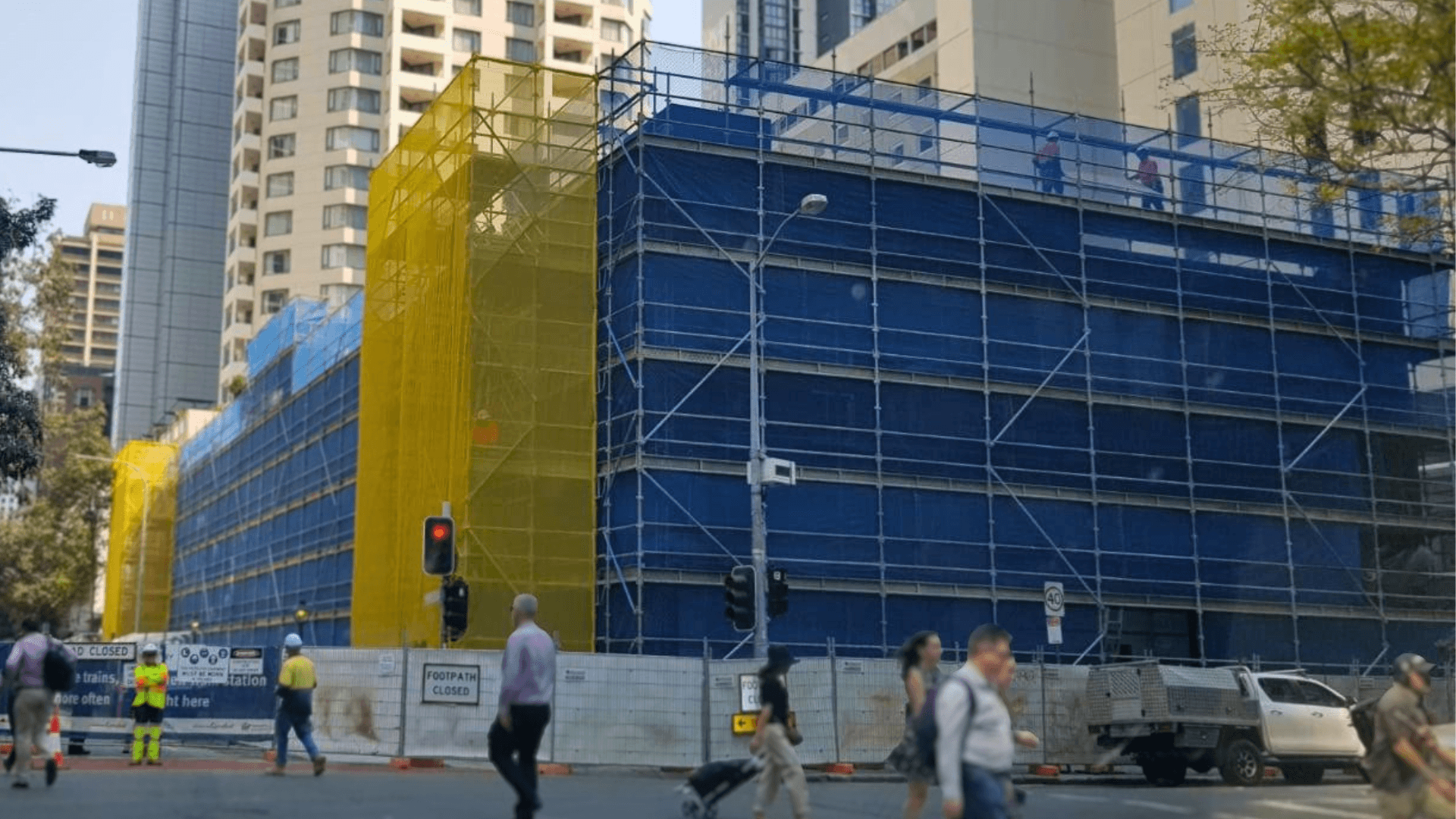
Shade cloth remains useful for screening and debris containment around scaffolding. Its open weave, however, allows rain to pass through, particularly when wind drives water across exposed elevations.
Wrapping each side of a stair tower may improve appearance and screening, but it does little to keep treads or landings dry.
This distinction matters. If reliable access is essential to planned work, selecting an enclosure primarily for screening creates a mismatch between what the site needs and what the scaffold covering can provide.
Rainfall duration is only one part of the risk. Orientation, prevailing wind, nearby buildings, ventilation and sunlight all influence how much water enters and how quickly stairs dry. A tower on an exposed elevation may remain wet long after rain has passed, while a more sheltered tower on the same project stays usable.
Treating both locations in exactly the same way makes little sense.
A practical shift in how stairs are enclosed
Where reliable access is critical, solid weather-resistant sheeting can provide a more suitable level of protection around temporary stair towers.
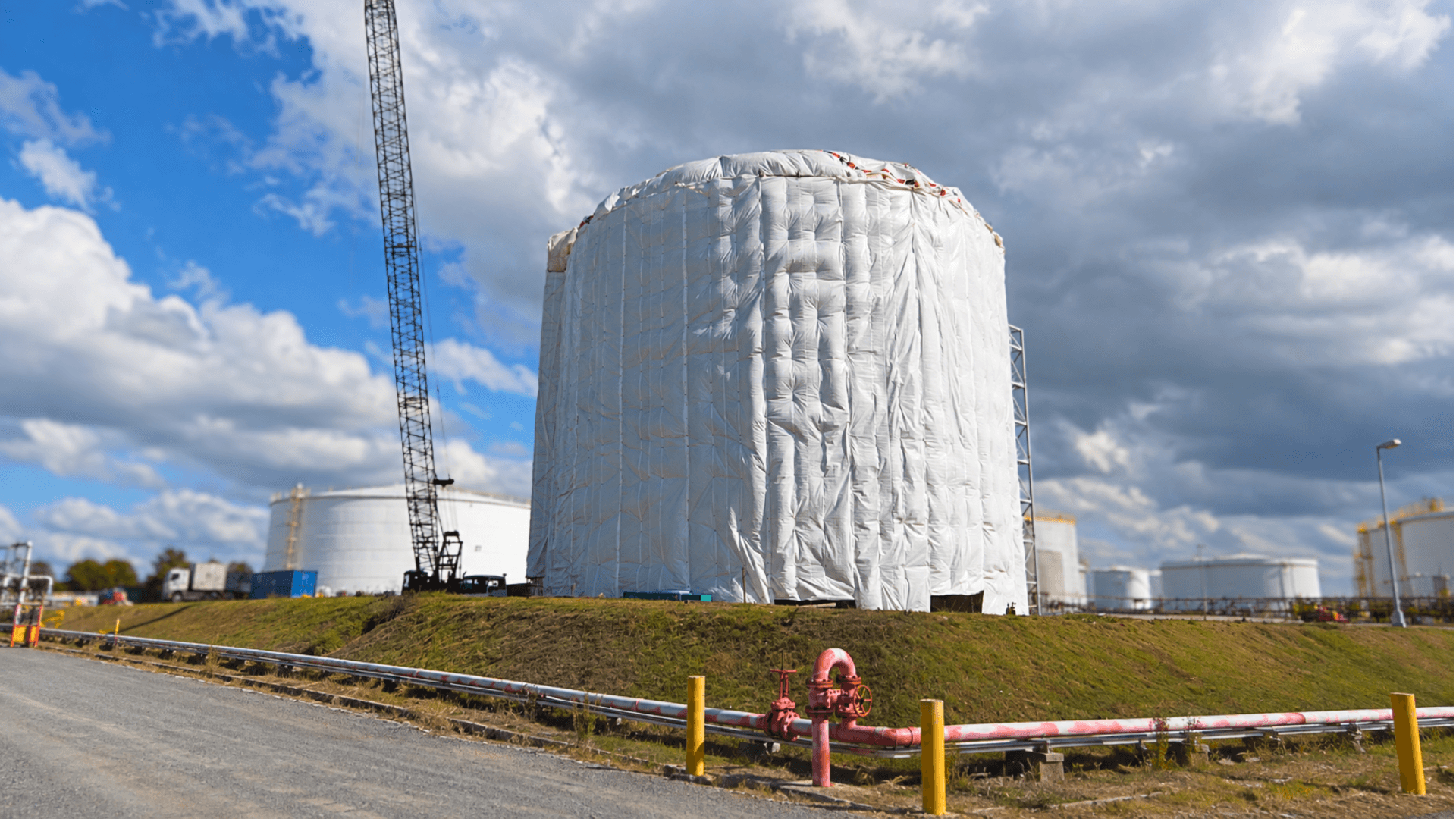
Unlike porous shade cloth, solid sheeting limits rain entering through exposed sides. Sheet layout is important. Upper sheets should overlap lower sheets, allowing water to shed down the exterior face rather than run through joins. Openings, corners, entry points and transitions also need careful detailing, as small gaps can undermine an otherwise effective enclosure. Containment sheeting installation follows this same weatherproofing principle, with upper sheets overlapping lower sheets to reduce rain entry.
Some projects may require a tighter system with welded or sealed joins. Others will gain more from adding overhead cover at exposed entries and upper landings. Drainage still needs attention, along with routine inspection and housekeeping after severe weather.
None of these measures guarantees dry stairs in every condition. A well-designed enclosure does, however, reduce direct exposure and make safe access easier to maintain.
Reducing rain entry means less time spent clearing water and waiting for stairs to dry. Keeping access available helps workers, tools and materials reach work fronts as planned, with fewer interruptions forcing supervisors to relocate crews or reschedule dependent activities. This helps maintain the planned sequence of work and reduces the risk of a local access issue causing delays across several floors.

Weather protection must be designed with the scaffold
Replacing shade cloth with solid sheeting is not simply a matter of changing materials.
An impermeable enclosure catches more wind and changes the loads applied to the scaffold structure. Fixing methods, tie patterns, bracing and the supporting structure may all need review. Ventilation, lighting, entry points and emergency access also form part of a workable design.
Scafclad installation requirements specifically state that scaffolding and other supporting structures must be engineered before installation to account for the additional wind loading created by encapsulation.
These requirements are easier to address during scaffold planning than after installation. Early coordination gives scaffold designers, engineers and site teams time to assess exposure, select a suitable enclosure and account for added loads before materials arrive on site.
Waiting for a poor forecast leaves fewer options. Existing scaffold may require modification, suitable sheeting may not be readily available and installation needs to happen while the project is already preparing for rain.
Consider access as part of wet-weather planning
Wet-weather planning usually focuses on exposed work, materials and completed finishes. Access should sit in the same conversation.
A useful review starts by identifying stair towers with no practical substitute. How many workers rely on each one? Which levels and trades would lose access? Could another route manage extra traffic safely? How long would wet stairs take to inspect, clear and reopen?
The answers will show where stronger weather protection is warranted and where shade cloth remains adequate.
Not every stair tower needs a weather-resistant enclosure. But when one access route carries a significant share of daily site movement, its availability becomes part of the construction program.
Wet-weather planning should consider not only the work being performed, but how people safely reach it.
Protecting critical access is one practical way to reduce weather-related disruption and keep work moving when conditions change.